
Steam Rotary Union Guide: Siphons, Seals & Dryers
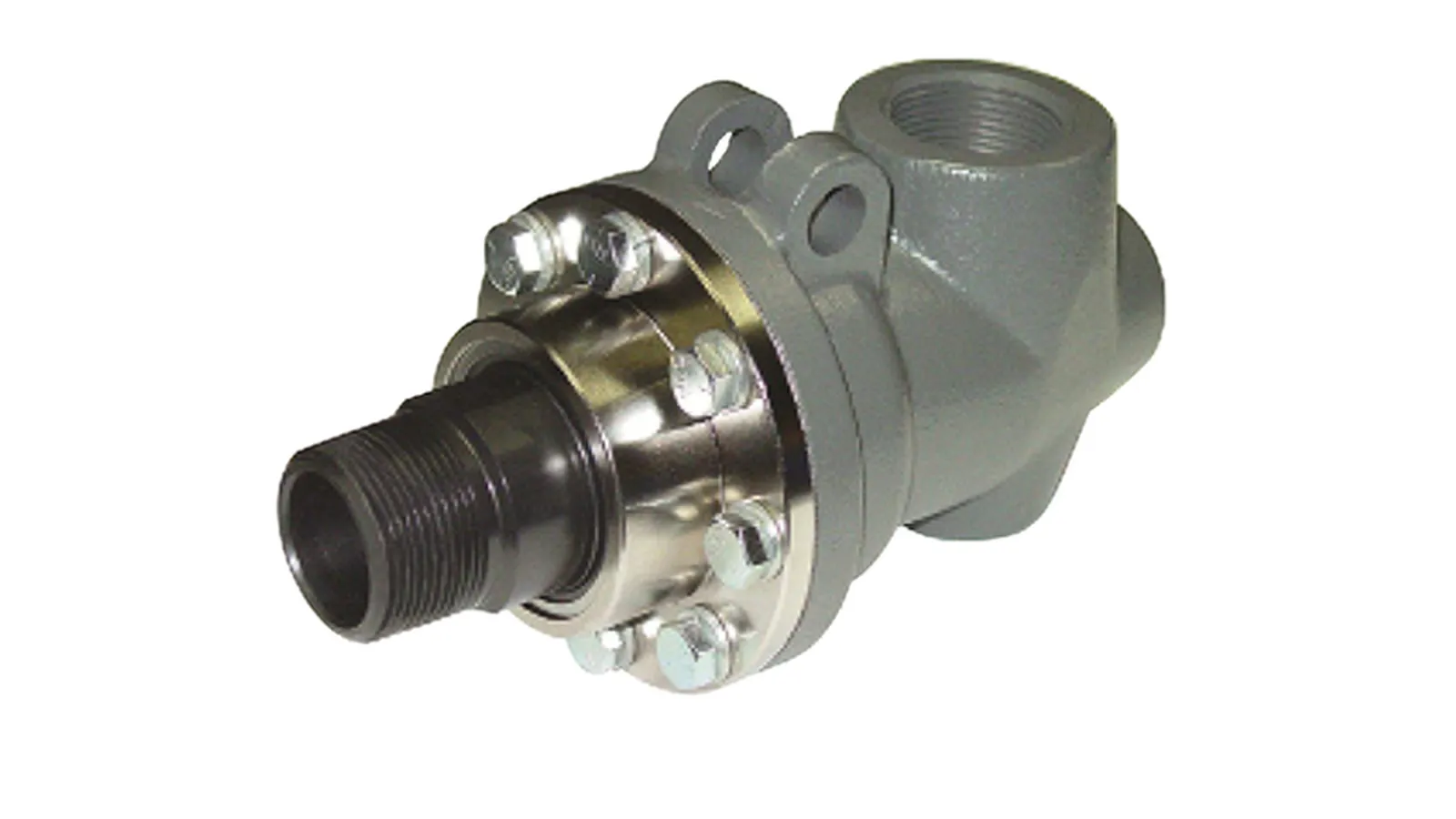
Table of Contents
A steam rotary union is the highest-maintenance rotary union in the plant — and the one where a mistake costs the most. Steam at 180 °C, condensate hammering, and 24/7 duty punish misalignment, wrong seals and undersized condensate lines faster than any other service. This guide covers how steam rotary joints work, how to spec the siphon and seals, and how to keep dryers and rolls running.
You will learn the siphon system, the carbon seal stack, sizing rules for steam and condensate, installation and alignment requirements, and the failure modes that shut down paper machines and rubber lines. Where a number is a hard physical constant it is stated as such; where it depends on the machine it is given as a typical range.
The Snapshot
- Steam unions transfer saturated steam into rotating cylinders, dryers and rolls at up to ~180 °C and 10-17 bar, with a practical class ceiling around 20 bar and 212 °C.
- Siphon systems remove condensate continuously — the condensate line must be sized for the condensate rate, not the steam flow. At 1 bar absolute, condensate occupies about 1/1,600 of the steam's volume; at 10 bar it is about 1/170. The mass flow is identical either way.
- Seal stack: carbon graphite faces against hardened steel, silicon carbide (SiC) or tungsten carbide (WC), spring-loaded, with a serviceable seal kit.
- Construction: a steam union is a dual-passage joint — steam in and condensate out through coaxial passages in one housing.
- Installation: alignment within 0.1 mm and flexible connections are mandatory — steam pipes expand and transmit load.
- Common failures: condensate flooding (wrong siphon), seal chatter (misalignment), and blown carbon faces (dry running).
What Is a Steam Rotary Union?
A steam rotary union (often called a steam joint) transfers saturated steam from a stationary supply pipe into a rotating dryer cylinder, calendar roll or vulcanizer drum, and returns condensate to the plant's condensate system. The machine side rotates continuously; the steam side is fixed — the union is the interface that lets both exist at once.
Two families exist: stationary syphon (the union and siphon pipe are stationary inside a rotating cylinder) and rotating syphon (the union rotates with the cylinder and the condensate scoop is inside). Stationary syphons are the most common on modern high-speed machines because they allow larger condensate lines and better drainage.
The working pressure is set by the process: corrugators and drying cylinders typically run 8-12 bar saturated steam; rubber vulcanizers 10-17 bar; some food and textile dryers run lower at 3-6 bar. Temperature follows the saturated steam curve — at 10 bar, roughly 180 °C. Browse the steam rotary union range if you want the short version; the rest of this guide explains why those numbers matter.
Saturated steam: the pressure–temperature table you actually need
Saturated steam lives on a single curve: one pressure, one temperature. Set the header pressure and you have set the dryer surface temperature — you cannot raise one without the other. That is why the first number in any steam spec is the operating pressure, not the temperature.
| Pressure (bar absolute) | Saturation temp (°C) | Typical service |
|---|---|---|
| 1 | 100 | Atmospheric drying, low-pressure food lines |
| 2 | 120.2 | Textile dryers, low-temperature calenders |
| 3 | 133.5 | Small dryers, curing rolls |
| 5 | 151.9 | Medium-pressure dryers, corrugator preheaters |
| 8 | 170.4 | Corrugators, paper drying groups |
| 10 | 179.9 | Paper machines, calenders |
| 12 | 188.0 | Rubber calenders, high-speed paper |
| 15 | 198.3 | Vulcanizers |
| 17 | 204.4 | High-pressure vulcanizing |
| 20 | 212.4 | Practical ceiling for standard steam unions |
Note the units: plant gauges read pressure above atmosphere, so a header running 10 bar gauge sits near 11 bar absolute — roughly 184 °C. The table above is in bar absolute, matching the physics. When you quote a pressure to a supplier, state which one you mean.
Almost all the heat a dryer receives comes from condensation, not from cooling the gas. The phase change releases latent heat — about 2,257 kJ/kg at 1 bar, falling to about 2,015 kJ/kg at 10 bar — and condensing steam transfers that heat at 6,000-15,000 W/m²·K, an order of magnitude above hot water or thermal oil at the same temperature. Steam also condenses at constant temperature across the wall, which keeps the roll surface even. That combination — high heat flux plus uniform temperature — is why steam-heated cylinders are standard wherever drying speed matters.
Single and dual passage construction
A steam union carries two flows at once: supply in, condensate out. In a dual-passage union the two streams run through coaxial passages inside one housing — typically the condensate pipe through the center with steam in the annular space around it, or the reverse depending on the builder. A single-passage union handles one stream and is used where the second flow returns through a separate pipe or a second union. The distinction matters at the specification stage: dual-passage saves a connection point and is the norm on paper and rubber machines, while single-passage designs simplify the joint on small rolls. The trade-offs are covered in single vs multi-passage unions.
The reference point: Kadant and the Johnson heritage
Kadant, through its Johnson brand heritage, traces the rotary joint back to the 1930s, when the first production joints were built for steam-heated paper dryer rolls. Mills still specify Johnson-style footprints out of habit, which means any replacement — ours included — has to bolt into that envelope. What you actually compare between suppliers is the construction detail:
| What to check | Johnson/Kadant (public) | LOOP ENGINEERING |
|---|---|---|
| Face pairing | Carbon on hardened counterface, typical of the class | Carbon graphite on SiC or tungsten carbide, documented per model |
| Body material | Steel or stainless depending on grade | Steel or stainless, food-grade option on request |
| Service parts | Global distribution network | Factory-direct, seal kit availability confirmed before order |
| Sizing support | Through distributor | Direct engineering sizing from your bore, pressure and condensate numbers |
None of this is a claim about specific competitor model numbers — it is the checklist we would use against any supplier, ourselves included.
Siphon Systems Explained
The siphon is what keeps a steam-heated cylinder from flooding. Steam condenses on the inside wall of the rotating cylinder, forming a film of water that must be removed continuously — otherwise the condensate pool blocks heat transfer and the dryer loses output.
How it works: a siphon pipe (or pickup scoop) extends close to the cylinder wall. Steam pressure inside the cylinder pushes condensate into the scoop, up the siphon pipe, and out through the condensate passage of the rotary union into the condensate return line. The differential pressure between the steam space and the condensate line drives the flow.
Sizing the condensate line: the line must handle the condensate rate at the available differential pressure — typically 0.5-1.0 bar. A common failure is sizing the condensate line for steam flow instead of condensate volume, which floods the cylinder. Rule of thumb: condensate occupies roughly 1/1,600 of the steam's volume at atmospheric pressure and about 1/170 at 10 bar — either way the mass flow is identical, so size by mass flow and line velocity, never by steam volume.
Blow-through vs thermostatic: many installations run a small continuous blow-through of steam to push condensate (simpler, standard on paper machines). Thermostatic traps close on temperature and work on lower differential pressure. Choose the siphon and trap combination with your machine builder or supplier — they must match.
Stationary vs rotating siphon, and where each wins
With a stationary siphon the union stays fixed, the siphon pipe hangs inside the rotating cylinder, and condensate leaves through a stationary passage — the rotating seal only ever sees steam. With a rotating siphon the union turns with the cylinder and a scoop dips into the condensate rim. Stationary siphons dominate modern high-speed machines: the condensate passage can be larger, and there is no rotating condensate seal to wear. Rotating siphons survive where the bore is small or where the cylinder needs a rotating supply — some vulcanizers and calenders.
Clearance, rim and blow-through
The clearance between the siphon inlet and the cylinder wall is a set number, not a guess: 6-25 mm typical for stationary siphons, set farther back on fast machines where the condensate rim is turbulent. At standstill, condensate sits in a rim whose thickness depends on cylinder volume and drain rate. If the siphon inlet sits inside that rim, the cylinder floods at startup until the rim thins — which is why slow warm-up with blow-through open is standard practice on paper machines.
Blow-through is typically 5-15% of rated steam flow on drying cylinders. It reads small on the steam meter and is decisive for drainage: the extra steam velocity drags the condensate film along the wall and into the siphon. It also explains why the condensate line carries two-phase flow and why the trap and blow-through must be tuned as one system, not two parts.
Seal Stack & Materials
The seal stack is the heart of a steam union. Two carbon graphite faces run against hardened counterfaces (steel or silicon carbide), spring-loaded to maintain contact as faces wear. The springs also keep the faces closed at low pressure, preventing steam leakage during startup.
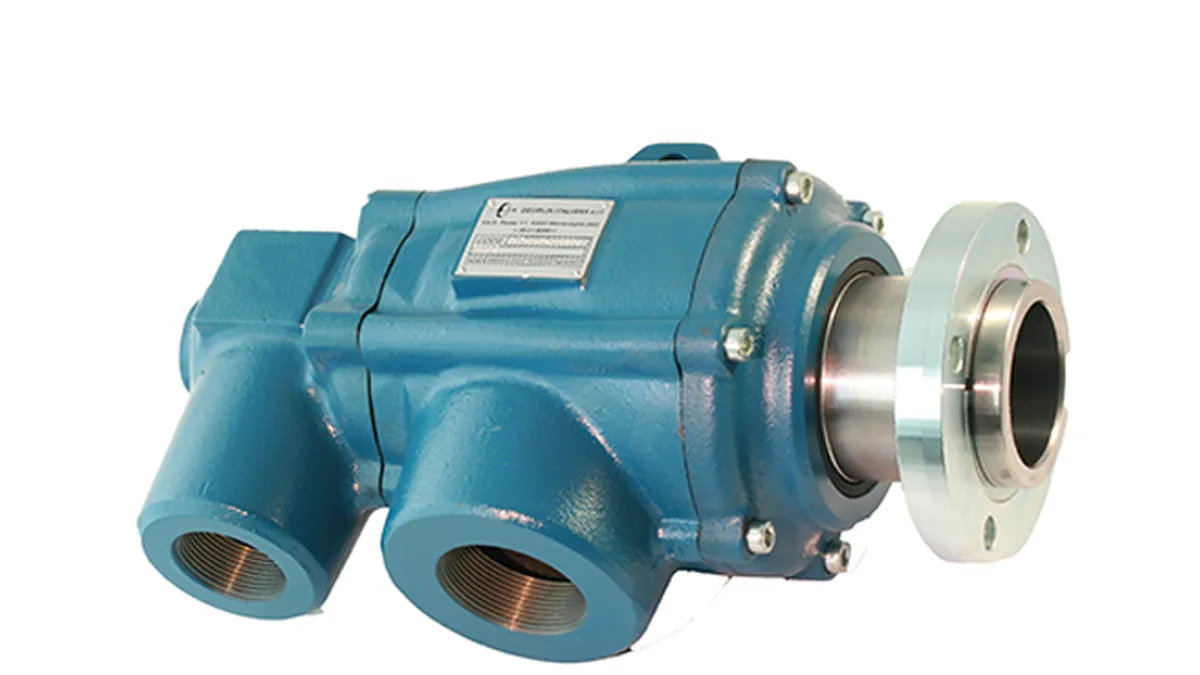
Carbon faces wear preferentially, protecting the shaft and housing. They are the replaceable wear part — a seal kit contains the carbon rings, springs, O-rings and gaskets needed for a rebuild. Keep one on the shelf for every critical union.
Elastomers in a steam union are limited to the static O-rings and are almost always FKM (Viton) or PTFE-coated, because NBR fails above 100 °C. Confirm the O-ring material when ordering — a standard pneumatic union's NBR O-rings will not survive steam service. For service above roughly 200 °C, FFKM or PTFE-encapsulated seals are the typical answer.
Housing material: steam unions use steel or stainless steel bodies, not aluminum, because of the temperature. Stainless resists the corrosion of hot condensate better and is standard on food and paper service.
Face materials compared
| Face pairing | Where it is used | Notes |
|---|---|---|
| Carbon graphite vs hardened steel | Economy service, clean condensate | Carbon wears first and protects the shaft journal |
| Carbon graphite vs silicon carbide (SiC) | Standard paper and food service | Hard, thermally conductive counterface; longest face life in clean loops |
| Carbon graphite vs tungsten carbide (WC) | Rubber and tire lines, dirty condensate | Resists erosion from scale and abrasive carry-over |
Carbon is always the sacrificial face. It is self-lubricating, tolerates brief dry contact without galling the counterface, and wears down instead of taking the shaft with it. The pairing choice is a dirt-versus-cost trade: SiC for clean loops where you want maximum face life, WC where the condensate carries scale or dirt.
Seal life and what kills it
Expect 6-18 months between rebuilds on continuous steam duty — the spread is duty, not luck. A rebuild is a seal-kit swap that takes 30-60 minutes on a planned stop. Four things cut seal life short:
- Dry running. Spinning a union before steam reaches the faces cracks the carbon in minutes.
- Misalignment. Side load makes the faces chatter, and chatter micro-cracks the carbon.
- Dirty steam. Scale and weld debris embed in the faces and lap them out.
- Steam cutting. A leaking face erodes into a groove fast at 10 bar.
The whole life-extension program is three items: purge before spin-up, align within 0.1 mm, and keep the strainer in service.
Sizing & Selection
Size a steam rotary union on three numbers: cylinder bore, steam pressure, and condensate rate. The port sizes follow:
- Steam inlet: sized for steam flow at your pressure — typically G1/2 to G2 depending on cylinder heat load.
- Condensate outlet: sized for the condensate mass flow and the available differential — usually one size larger than you would guess, because the line carries two-phase flow.
- Body: the union body must fit the cylinder journal bore and leave room for the siphon pipe inside.
Selection checklist for steam: media (saturated steam + condensate), pressure (bar), cylinder speed (RPM), cylinder bore and journal size, siphon type (stationary/rotating), connection threads (G/NPT), and orientation (horizontal/vertical). Fill these in and a supplier can quote the correct model. The full workflow — including how to handle speed, media and mounting when the application is less obvious — is in the rotary union selection guide.
Steam velocity and line sizing
Steam supply lines are sized for 15-30 m/s typical at operating pressure; condensate return lines are kept below roughly 15 m/s because two-phase flow at higher velocity erodes elbows and hammers. The numbers behind the rule: at 10 bar absolute, 1 kg of steam occupies about 0.194 m³, while the same 1 kg of condensate occupies about 0.0011 m³ — a 170:1 collapse at the moment of condensation. The condensate line therefore carries a fraction of the steam line's volume at much higher density, plus whatever flash steam reforms downstream. Size the condensate side by mass flow and flash fraction, and when in doubt take the next port size up.
Dryer & Roll Applications
Paper machines: the largest steam union user. Yankee dryers, MG cylinders and drying groups run multiple steam joints per machine, often at 8-12 bar with stationary syphons. Reliability is critical — a failed dryer union means a web break and hours of lost production.
Rubber and tire: vulcanizers, calenders and extrusion lines use steam-heated rolls and drums. Rubber processes often spike above 15 bar, and the condensate is dirty, so hardened faces (tungsten carbide) and stainless bodies extend life.
Plastic film: cast film and extrusion lines use steam-heated chill rolls and melt rolls. Clean condensate is important — carry-over can contaminate the film surface, so the return side gets the same attention as the supply side.
Textile and food: dryers and calenders run at lower pressure (3-6 bar) but often with food-grade or corrosion-resistant requirements. Stainless unions with FKM seals are typical.
In every application, the two design goals are the same: remove condensate fast enough to keep the cylinder hot, and keep the seal stack alive as long as possible.
Installation & Alignment
Steam pipes expand with heat — a rigid connection transmits that expansion into the union and kills the seals. Install with a flexible steam hose or a properly designed pipe loop between the fixed supply line and the union inlet.
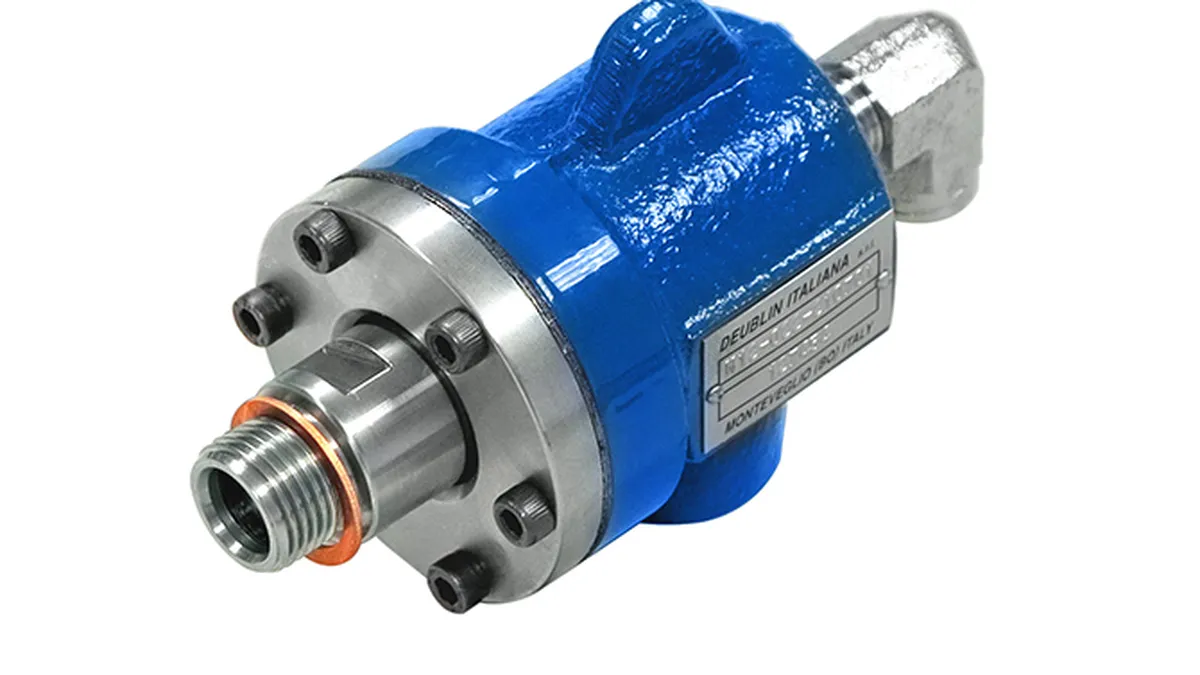
- Align within 0.1 mm between the union axis and the cylinder journal axis. Use a dial indicator on the journal before bolting the union.
- Support the supply pipe — never let the pipe weight hang on the union body.
- Allow for thermal growth of the cylinder in the axial direction; the union must not bind.
- Install a strainer on the steam supply to protect the faces from scale and weld debris.
- Check rotation direction and that the siphon scoop is positioned correctly before startup.
Water hammer and flash steam protection
Two-phase flow is the source of most condensate-line damage. When a pocket of condensate sits in a steam line and live steam hits it, the steam collapses violently — the classic hammer that cracks flanges and fatigues the union body. Prevention is plumbing, not luck: drip legs with traps ahead of the union, slow warm-up with traps open, a strainer before the union, and condensate lines sloped and free of pockets.
Flash steam is the other half of the problem. Condensate at 10 bar carries sensible heat; when it drops to atmospheric pressure, roughly 15% of its mass re-flashes into steam. That flash in a return line is normal — the line must be sized for it, and a flash tank separates it before the condensate pump. An undersized return hammers and erodes; a correctly sized one runs quiet.
Dry running protection
A steam union spins with the roll. If the roll spins before steam reaches the faces — or steam is shut off while the roll keeps turning — the carbon runs dry: faces crack, chatter, and leak. Standard practice is to purge the union with steam (or open the blow-through) before rotation, and never coast a steam-heated roll without supply. Machines that warm up slowly run the roll at crawl speed with blow-through open for exactly this reason.
Maintenance & Condensate
Steam unions earn their maintenance. The standard service interval is 6-18 months depending on duty, and the rebuild itself is quick — the seal kit swap takes 30-60 minutes with the machine down.
Condensate management is the real maintenance driver:
- Check the trap and blow-through regularly — a failed trap floods the cylinder.
- Monitor cylinder surface temperature; a cold spot indicates condensate pooling.
- Blow down the strainer on schedule to keep scale off the faces.
- Log seal life per union — when you know the interval, you can rebuild on the planned stop instead of on failure.
Keep a seal kit per union on the shelf. The kit cost is a fraction of one unplanned shutdown.
Condensate recovery: closing the loop
Condensate is not waste — it is 80-90 °C treated water with heat already paid for. Returning it to the boiler room instead of dumping it cuts makeup water and typically saves 10-15% of boiler fuel, because every kilogram of hot condensate carries heat the boiler does not have to add. The standard return train runs trap → flash tank → condensate pump → deaerator, with the flash steam from the tank feeding low-pressure loads instead of venting. A steam union that drains reliably is what makes that loop possible; a union that floods the cylinder makes the trap and the whole return train lie to you.
Troubleshooting Common Failures
| Symptom | Likely cause | Action |
|---|---|---|
| Cold cylinder, low output | Condensate flooding — trap, blow-through or line size wrong | Check trap, blow-through rate and condensate line size |
| Steam leaking from the union | Worn carbon faces or broken springs | Rebuild with seal kit; re-check alignment |
| Chattering or vibrating union | Misalignment or dry seal face | Dial-indicator alignment; purge before spin-up |
| Short seal life (weeks, not months) | Side load from pipe, dirty steam, or dry startup | Flexible connection, strainer in service, purge routine |
| Water hammer in the condensate line | Slug flow — line undersized or differential too low | Enlarge line, raise differential, add flash tank |
| Condensate carry-over into process | Siphon clearance wrong or blow-through too high | Reset clearance, tune blow-through with the trap |
| Union body runs hot | Steam short-circuit past the siphon, poor drainage | Check siphon seating and differential pressure |
| Leak past static O-ring | Wrong elastomer (NBR) or aged FKM | Confirm FKM/FFKM on the rebuild kit |
Quick Answers
What pressure and temperature does a steam rotary union handle?
Standard designs handle saturated steam up to about 10-17 bar and 180-205 °C. The practical ceiling for the class is roughly 20 bar and 212 °C; special high-temperature builds rated near 250 °C exist but use FFKM or metal seals, and you pay for them.
What is a siphon rotary union?
A steam union with an internal siphon pipe that removes condensate continuously from the rotating cylinder, keeping the heat-transfer surface clear.
Why does my dryer have a cold spot?
Almost always condensate pooling — the trap or blow-through is not removing condensate at the rate it forms. Check the condensate line and differential pressure.
Can I use a water rotary union for steam?
No. Steam needs carbon faces, steel or stainless bodies, and FKM/PTFE elastomers. A water union's NBR seals and aluminum body fail quickly above 100 °C.
How often should I rebuild a steam union?
Typically every 6-18 months depending on duty. Log seal life and schedule the rebuild on a planned stop before failure.
What is the difference between single-passage and dual-passage steam unions?
A dual-passage union carries steam in and condensate out through coaxial passages in one housing; a single-passage union handles one stream and needs a separate return path.
How long do the carbon seal faces actually last?
6-18 months on continuous duty. Clean steam, 0.1 mm alignment and a startup purge routine push you to the long end; any of the four killers above pulls you to the short end.
Why did my union fail two weeks after a rebuild?
Check three things in order: the strainer (dirty steam laps new faces out fast), the alignment (rebuilt seals still chatter if the pipe loads the body), and the startup routine (dry running kills fresh carbon fastest of all).
Do I need a special union for superheated steam?
Yes. Superheated steam runs above the saturation curve and removes the condensate film that lubricates and cools the faces. Standard saturated designs are not rated for it — specify a superheated-service build and confirm the temperature limit with the supplier.
Ready to size a steam union for your dryer or roll? Send us the cylinder bore, operating pressure and condensate rate — we will confirm the model, the siphon setup and the seal kit, and quote with lead time. Contact the LOOP ENGINEERING team.
NEXT STEP
Ready to Spec the Right Rotary Union?
Send us your requirements — our team responds within 24 hours with pricing and lead time.
Written by
LOOP ENGINEERING TeamRotary union engineering specialist. LOOP ENGINEERING helps machine builders and maintenance teams source factory-direct rotary unions.