
Steam vs Hydraulic vs Pneumatic Rotary Unions
Table of Contents
If you are specifying a rotary union and not sure whether you need the pneumatic, hydraulic, steam, or high-speed family, this comparison will narrow it down fast. We compare the four families on the parameters that actually matter for selection — media, pressure, speed, seals, and the applications each one fits.
Every figure below is a typical range for standard industrial designs, not a vendor claim. Match your duty to the family and you will order the right union the first time.
Comparison at a Glance
- Steam unions: 10 bar typical, up to 180 °C, carbon graphite seals, used in paper, rubber, plastic lines.
- Hydraulic unions: 250–500 bar, multi-channel, high-grade steel, used in heavy equipment and presses.
- Pneumatic unions: 15 bar, compact aluminum, used in factory automation.
- High-speed unions: 10,000–20,000 RPM, precision bearings, used in CNC spindles.
- Coolant unions: up to 70 bar through-spindle, for machine tool coolant feed.
Six-dimension comparison matrix
Read the table as typical ranges for standard industrial designs. Cost is relative to a single-passage pneumatic union, the cheapest build in the class. Where a number depends on duty, the range is marked typical.
| Media | Working pressure | Temperature | Speed | Seal type | Typical life | Typical cost |
|---|---|---|---|---|---|---|
| Compressed air | 6–16 bar | −20 to +80 °C (FKM to +150 °C) | 0–3,000 RPM standard | NBR/FKM O-rings, aluminum body | 10,000–30,000 h with clean dry air (typical) | Lowest — single-passage builds |
| Water & coolant | Up to 20 bar standard; 7–70 bar spindle builds | 0–90 °C | 0–5,000 RPM standard; 10,000–20,000+ RPM spindle | Mechanical faces, carbon on ceramic or SiC | 5,000–15,000 h (typical) | Low to moderate |
| Saturated steam | 5–20 bar abs; standard class 10–17 bar | 151.9–212.4 °C on the saturation curve | 0–3,000 RPM; dryers 50–500 RPM typical | Carbon graphite on steel, SiC or WC, spring-loaded | 8,000–15,000 h between seal services | Moderate — carbon faces and condensate hardware |
| Hydraulic oil | 100–500 bar | −20 to +80 °C, fluid-dependent | 0–500 RPM standard; specialist builds to 3,000 RPM | Energized PTFE/polyurethane, precision steel bores | 3,000–10,000 h depending on filtration (typical) | Highest — multi-channel bodies cost 2–4× single-passage |
Two patterns stand out. First, pressure is the cost driver: each step up in pressure class tightens tolerances, upgrades seals, and moves the body from aluminum to steel. Second, speed is the life driver: the same union that runs years at 1,000 RPM can fail in hours at 20,000 RPM if the mounting is off.
Seal face materials compared
The seal face pairing is the single most important material decision in a rotary union, and it is chosen per medium. Carbon graphite is always the sacrificial face — it is self-lubricating, tolerates brief dry contact, and wears down instead of taking the shaft with it. What changes is the counterface:
| Face pairing | Where it earns its keep | Notes |
|---|---|---|
| Carbon graphite vs hardened steel | Air, water, economy steam | Carbon wears first and protects the shaft journal; lowest-cost pairing |
| Carbon graphite vs silicon carbide (SiC) | Clean steam, food-grade water, spindle coolant | Hard and thermally conductive; longest face life in clean loops |
| Carbon graphite vs tungsten carbide (WC) | Dirty steam, abrasive coolant, rubber and tire lines | Resists scale and erosion; the premium choice |
The rule of thumb: match the counterface to the dirt. Clean, filtered media run longest on SiC; abrasive carry-over or scale favors WC; low-cost, low-pressure duty is fine on hardened steel. Carbon stays the same either way.
Why prices diverge
Cost differences between the four families are construction, not margin. A single-passage pneumatic union is an aluminum body with O-rings — the cheapest thing in the catalog. A water union adds mechanical faces and better bearings. A steam union adds carbon faces, spring loading, and condensate hardware, and the body must be steel or stainless because aluminum cannot take the temperature. A hydraulic union pays for pressure: hardened steel or stainless rotors, precision-ground bores, energized seal stacks, and a multi-channel body. Multi-channel construction typically runs 2–4 times the price of a single-passage union in the same pressure class, so every channel you add is real money. High-speed spindle unions sit above all of them on precision bearings and balancing, which is why a spindle union costs multiples of a pneumatic one at the same port size.
Air & Water Rotary Unions
Air and water unions are the workhorse of factory automation. They run at 10–15 bar, handle compressed air, vacuum, water, and light coolant, and use NBR seals (standard) or FKM (for higher temperature or aggressive media).
They are compact, low-cost, and easy to service. Single-passage designs dominate; multi-passage versions add channels for combined air + water or air + vacuum service in one body.
Typical applications: pick-and-place grippers, rotary index tables, packaging lines, textile machines, and simple coolant feed on lighter machine tools.
Typical parameters
| Parameter | Typical range |
|---|---|
| Working pressure | Air 6–16 bar; water up to 20 bar standard, higher on request |
| Temperature | −20 to +80 °C with NBR; to +150 °C with FKM |
| Speed | 0–3,000 RPM standard; bearing upgrade for higher |
| Seal materials | NBR standard, FKM for heat or aggressive media, PTFE-based for chemical duty |
| Body | Anodized aluminum standard; stainless for food or aggressive water |
Selection points for air and water duty
- Confirm the media mix. A single-passage union carries one medium. If one line alternates air and water, spec the seals for the more aggressive medium — water and wet air both wash lubricant off seals designed for dry air.
- Check for vacuum. Vacuum service needs reinforced seals and a body rated for external pressure; a standard pressure-rated union can collapse inward on a vacuum passage.
- Size ports for flow, not guesswork. Keep air velocity in the typical 10–30 m/s range and water velocity in the 1.5–3 m/s range at operating pressure, then pick the next standard port size.
- Body material. Anodized aluminum is cheap and fine for dry air; choose stainless where the water is aggressive or food contact applies.
- Speed ceiling. Standard builds run comfortably to about 3,000 RPM. Beyond that, ask for a bearing upgrade or move to the high-speed family.
Failure modes and maintenance
- Contamination. Dirty air or unfiltered water laps the seal faces. Filter the supply — 5 µm is typical for pneumatic systems — and keep strainers in service on water lines.
- Moisture in compressed air. Condensate in the air line corrodes the rotor and washes away lubricant. A refrigerated dryer holding ISO 8573-1 class 4 water is typical for automation duty.
- Seal extrusion. Over-pressure pushes O-rings into the clearance gap. Never exceed the rated pressure, even for a leak test.
- Vacuum collapse. On vacuum passages, use seals rated for external pressure.
- Water quality. Hard water deposits scale on the faces; particles score them. A strainer and softened water prevent most water-side failures.
- Maintenance. Air and water unions are the cheapest family to maintain: clean and re-lubricate per the manual, replace the seal kit when leakage appears, and keep a spare kit on the shelf — it costs a fraction of one unscheduled stop.
Steam Rotary Unions
Steam unions transfer saturated steam into rotating drying cylinders, calenders, and vulcanizers — most common in paper mills, rubber processing, and plastic film lines. Standard ratings are about 10 bar and 180 °C.
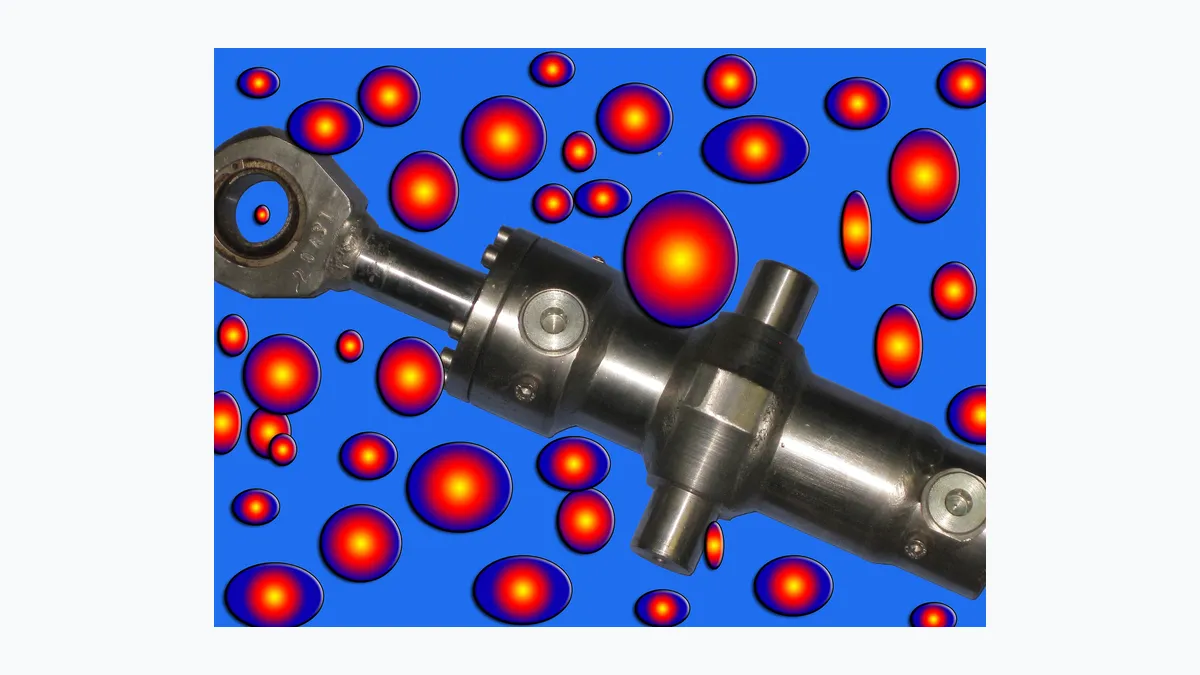
The seal stack is the key difference: carbon graphite seal faces running against hardened steel or silicon carbide, with springs to maintain contact pressure. Siphon designs add a condensate return passage through the same union.
Steam duty is hard on seals. Expect 8,000–15,000 hours before seal service, and keep a seal kit on hand — the field swap takes minutes and avoids days of downtime.
Typical parameters
| Parameter | Typical range |
|---|---|
| Media | Saturated steam in, condensate out — dual-passage construction |
| Pressure | 5–20 bar absolute; standard class 10–17 bar |
| Temperature | 151.9–212.4 °C, set by the saturation curve — one pressure, one temperature |
| Speed | 0–3,000 RPM; dryer drums typically run 50–500 RPM |
| Seals | Carbon graphite on hardened steel, SiC or WC; spring-loaded faces |
| Elastomers | FKM or PTFE; FFKM above roughly 200 °C |
| Body | Steel or stainless — never aluminum at steam temperature |
Selection points for steam duty
- Pressure first, temperature second. Saturated steam lives on a single curve: at 5 bar absolute it is 151.9 °C, at 10 bar 179.9 °C, at 20 bar 212.4 °C. State the pressure in bar absolute, not gauge, so the saturation temperature is unambiguous.
- Condensate is half the spec. Steam condenses on the cylinder wall — at 10 bar, 1 kg of steam collapses to about 1/170 of its volume as water. The union must return that condensate through a siphon at the available differential pressure, typically 0.5–1.0 bar.
- Count the passages. Steam in and condensate out normally means a dual-passage union; some machines use two single-passage unions instead. Steam rotary unions are built for exactly this duty.
- Match the elastomer. NBR dies above 100 °C. Steam service means FKM or PTFE O-rings, with FFKM above roughly 200 °C.
- Plan the rebuild. Expect 8,000–15,000 hours between seal services on continuous duty, and keep a seal kit on the shelf — the swap takes 30–60 minutes on a planned stop.
Failure modes and maintenance
- Condensate flooding. The cylinder fills when the trap, blow-through, or condensate line is undersized — the cylinder runs cold and output drops. Size the condensate line by mass flow, never by steam volume.
- Dry running. Spinning the union before steam reaches the faces cracks the carbon in minutes. Purge before spin-up; never coast a steam-heated roll without supply.
- Misalignment. Side load from rigid steam pipe makes the faces chatter and micro-cracks the carbon. Align within 0.1 mm and connect with a flexible hose or pipe loop.
- Dirty steam. Scale and weld debris embed in the faces and lap them out. Keep the strainer in service and blow it down on schedule.
- Steam cutting. A leaking face erodes into a groove fast at 10 bar. Rebuild at the first sign of visible steam.
- Maintenance. Steam is the highest-maintenance family of the four: rebuilds every 8,000–15,000 hours typical, 30–60 minute seal-kit swaps, and a daily check that the trap and blow-through are removing condensate.
Hydraulic Rotary Unions
Hydraulic unions transfer oil at high pressure — commonly 350 bar (about 5,000 psi) with special designs to 500 bar. They are built with hardened steel or stainless rotors and multi-channel bodies (2, 4, 6 channels are standard).
Because of the pressure, the machining tolerances and seal stacks are much more demanding than air unions, which is why hydraulic unions cost several times more.
Typical applications: rotary actuators, excavator attachments, hydraulic presses, marine systems, and hydraulic test stands where a rotating joint must carry full working pressure continuously.
Typical parameters
| Parameter | Typical range |
|---|---|
| Media | Mineral oil, synthetic esters, water-glycol (HFC), invert emulsions (HFA/HFB) |
| Pressure | 100–500 bar continuous; 350 bar is a common class |
| Flow profile | High pressure, small displacement — flow is usually modest |
| Temperature | −20 to +80 °C typical, fluid-dependent |
| Speed | 0–500 RPM standard; specialist builds to 3,000 RPM |
| Channels | 2, 4, 6 standard; more on request |
| Seals / body | Energized PTFE or polyurethane seals; hardened steel or stainless rotor and body |
Selection points for hydraulic duty
- Pressure class first. 100 bar, 250 bar, 350 bar, and 500 bar builds are different machines. Specify continuous pressure — a union that peaks at 500 bar occasionally is not the same spec as one that holds it all day.
- Fluid compatibility. Mineral oil is easy; fire-resistant fluids (water-glycol, invert emulsions) change the seal and bearing picture. State the exact fluid and brand to the supplier.
- Count channels honestly. A clamp cylinder plus a rotation actuator often means 2–4 passages in one body. Multi-channel bodies typically cost 2–4 times a single-passage union of the same pressure class, so every channel you add has a price. Hydraulic rotary unions in the catalog show the standard channel layouts.
- Viscosity and cold starts. Cold-start viscosity can exceed a seal's rating; a warm-up circuit protects the union on machines that run outside in winter.
- Filtration is life. Particle contamination is the number-one killer of hydraulic swivels. Hold the system's ISO 4406 cleanliness class and seal life follows.
Failure modes and maintenance
- Contamination. Particles score precision bores and embed in seals. Filtration is not optional — monitor oil cleanliness and service the filter on schedule.
- Seal extrusion. At 350–500 bar, a worn clearance gap extrudes the seal into the gap and it fails fast. Rebuilds must replace the full seal set, not one ring.
- Internal leakage. A leaking internal seal shows up as pressure drop, slow actuator movement, or drift. Log pressure and cycle times — drift that worsens is a seal, not a valve.
- Side load from hoses. Hydraulic hoses transmit whip and weight. Support the hoses so the union sees no bending load.
- Fluid incompatibility. Esters and water-glycol degrade NBR. Confirm the seal material against the fluid datasheet before ordering spares.
- Maintenance. Hydraulic unions are the most expensive family to service — precision seal sets and skilled labor. Planned rebuilds at 3,000–10,000 hours (typical, filtration-dependent) beat a field failure at full system pressure.
High-Speed Rotary Unions
High-speed unions are built for continuous rotation at 10,000–20,000+ RPM — CNC spindles, balancing machines, and high-speed machining centers. They use precision ball bearings, minimal rotating mass, and low-friction seals.
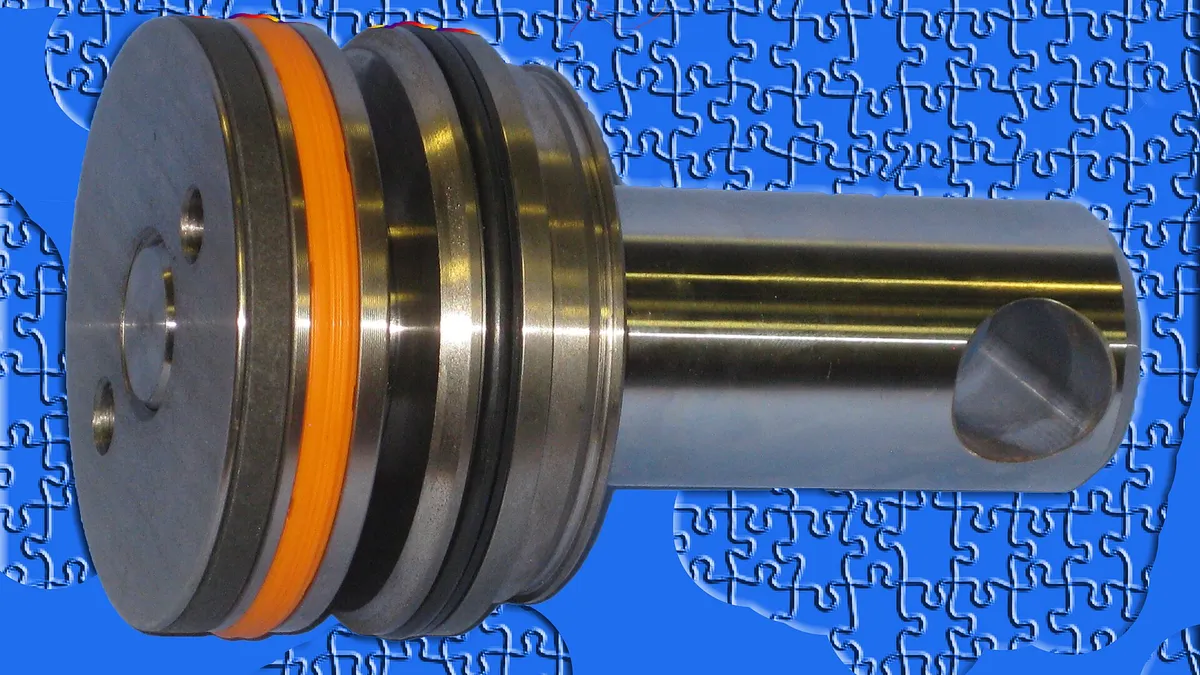
Through-spindle coolant versions handle up to 70 bar so cutting fluid reaches the tool at full spindle speed. Air versions feed blow-off or actuation air to the rotating spindle.
At these speeds, alignment and balancing are critical. Follow the manufacturer mounting instructions exactly — a small runout at 20,000 RPM destroys seals in hours.
Typical parameters
| Parameter | Typical range |
|---|---|
| Media | Water-miscible coolant, straight oil, air, MQL mist |
| Pressure | 7–70 bar through-spindle for coolant; 6–16 bar for air |
| Speed | 10,000–20,000+ RPM continuous |
| Seals | Low-friction mechanical faces; non-contact labyrinth for air service |
| Bearings | Precision angular-contact ball bearings, low rotating mass |
| Alignment | Critical — runout tolerance in the 0.01–0.02 mm range typical, per the mounting spec |
Selection points for spindle and coolant duty
- The speed rating must exceed machine speed. A union rated at 15,000 RPM running at 20,000 fails fast. State maximum continuous spindle speed, not the average.
- Coolant pressure and flow. Through-spindle coolant at 7–70 bar must reach the tool at full speed. Confirm both pressure and flow at the spindle nose, not at the pump.
- Balancing. At 20,000 RPM a small imbalance shakes the spindle. The union rotor must be balanced to its build class and the assembly clocked per the manual.
- Alignment. Mounting runout that is invisible at 3,000 RPM destroys seals in hours at 20,000. Dial-indicator the assembly and follow the torque sequence.
- Coolant quality. Filter the coolant — tramp particles from machining lap the faces out fast at speed.
Failure modes and maintenance
- Runout and misalignment. The classic spindle-union killer: faces wear on one side, leakage appears, then the bearing goes. Measure and correct mounting runout on every rebuild.
- Bearing failure. At 10,000+ RPM the bearings are the life-limiting part. Contaminated grease, coolant ingress, and imbalance all shorten bearing life.
- Coolant contamination. Swarf and hard-water scale in the coolant lap the faces. A 25–50 µm coolant filter is typical for spindle systems.
- Pressure spikes. Coolant pump start/stop creates hammer that can crack seals. Slow the pump ramp or add an accumulator.
- Dry running. Spinning with no coolant flow runs the faces dry — never warm up the spindle without coolant or air supply.
- Maintenance. Planned inspection every 3,000–8,000 hours (typical, speed-dependent): check bearings, faces, and runout, and replace the seal kit at the first sign of weep.
Which One for Your Machine?
Start with the media, then the pressure, then the speed. Compressed air or vacuum → pneumatic union. Water or light coolant below 20 bar → single-passage water union. Saturated steam → steam union with carbon seals. Hydraulic oil above 100 bar → multi-channel hydraulic union. CNC spindle duty → high-speed union rated for your spindle RPM.
When in doubt, send us your working pressure, speed, media, temperature, and port size — our engineers reply within 24 hours with a recommended model and datasheet. Request a quote from the contact page.
Selection decision tree
Work down the list; the first line that matches your duty decides the family:
- Media → family. Compressed air or vacuum → pneumatic. Water or coolant → water/coolant. Saturated steam → steam. Hydraulic oil above 100 bar → hydraulic.
- Pressure → rating class. Air 6–16 bar, water to 20 bar standard (70 bar spindle builds), steam 5–20 bar absolute, hydraulic 100–500 bar. Rate for continuous pressure, not the peak you hit once.
- Temperature → materials. Above 100 °C means FKM/PTFE elastomers and carbon faces in a steel or stainless body. Below that, NBR and aluminum are fine.
- Speed → bearing class. Above about 6,000 RPM, standard unions run out of bearing margin; above 10,000 RPM, spec a dedicated high-speed build.
- Channel count → body layout. One flow → single passage. Two or more flows (air + water, steam + condensate, two hydraulic circuits) → multi-passage body. Multi-channel costs 2–4× a single-passage union of the same class, so count honestly.
- Dirt → seal material. Clean media → carbon on silicon carbide. Abrasive carry-over → carbon on tungsten carbide.
Five-step decision checklist
- Write down media, continuous and peak pressure, temperature, maximum speed, flow rate, and port size.
- Run the decision tree; if two families fit, choose by temperature and duty cycle.
- Count the passages you need now — only add spares if the machine is likely to grow.
- Confirm seal faces, elastomers, and body material against the worst-case temperature and dirt.
- Send the duty list plus a mounting sketch to the supplier and get the recommended model and datasheet in writing before you order. The full workflow — media, speed, and mounting edge cases — is in the rotary union selection guide.
Frequently Asked Questions
Can one rotary union carry air and water in the same body?
Yes — a multi-passage union with separate channels handles air and water simultaneously, common on machines that need both gripper air and coolant feed in one rotating joint. Spec the seals for the more aggressive medium, keep the channels isolated, and remember that each added channel costs money: multi-passage bodies typically run 2–4 times a single-passage union of the same class.
What is the real difference between carbon, silicon carbide, and tungsten carbide faces?
Carbon is the sacrificial face in every pairing — self-lubricating, wears first, protects the shaft. The counterface is chosen by dirt: hardened steel for economy low-pressure duty, silicon carbide for clean loops where you want the longest face life, tungsten carbide where scale or abrasives are present. Clean media on SiC is the longest-wearing combination; dirty media needs WC despite the price.
Why do hydraulic unions cost so much more than pneumatic ones?
Pressure. A pneumatic union is an aluminum body with O-rings at 6–16 bar. A hydraulic union needs hardened steel or stainless rotors, precision-ground bores, energized seal stacks, and often a multi-channel body to hold 100–500 bar continuously. Add multi-passage construction at 2–4× the single-passage price and you are looking at several times the cost of an equivalent pneumatic union.
How often does each type need service?
Typical intervals: pneumatic unions 10,000–30,000 hours with clean dry air; water and light coolant 5,000–15,000 hours; steam unions 8,000–15,000 hours between seal rebuilds; hydraulic unions 3,000–10,000 hours depending on filtration; high-speed spindle unions 3,000–8,000 hours depending on speed and coolant condition. Every one of these moves with duty — the ranges are typical, not guarantees.
Can a steam union run hot water or thermal oil instead?
No. A steam union is built for the condensation duty of saturated steam — carbon faces, spring loading, condensate return, steel body. Thermal oil removes the condensate film that cools and lubricates the faces, and hot water changes the vapor-sealing balance entirely. Each medium needs its own seal and material spec; mixing them is how unions die young.
What speed is too fast for a standard pneumatic union?
Standard builds are comfortable to about 3,000 RPM; a bearing upgrade extends the range toward 6,000 RPM. Above that, you are in spindle territory — 10,000–20,000+ RPM needs the high-speed family with precision bearings, low rotating mass, and balanced rotors. Running a standard union past its bearing margin fails fast and takes the machine with it.
How many channels do I actually need?
Count the flows that must cross the rotating joint — that is the minimum channel count. One flow, one passage. Steam in plus condensate out, two. Clamp plus rotation on a hydraulic attachment, two to four. Resist adding spare channels for future use: multi-passage construction typically costs 2–4 times a single-passage union in the same pressure class, and you can always add a second union later.
What kills a rotary union fastest?
In order: contamination, misalignment, dry running, and wrong media. Dirt laps the faces out; misalignment chatters them; dry running cracks carbon in minutes; and the wrong medium destroys seals that were never rated for it. Filter the media, align the mounting, purge before spin-up, and confirm the fluid — that program covers most early failures in every family.
Still choosing between steam, hydraulic, pneumatic, and high-speed unions? Send us your media, pressure, temperature, speed, and port size — we will confirm the family, the seal materials, and the passage count, then quote with lead time. Contact the LOOP ENGINEERING team.
NEXT STEP
Ready to Spec the Right Rotary Union?
Send us your requirements — our team responds within 24 hours with pricing and lead time.
Written by
LOOP ENGINEERING TeamRotary union engineering specialist. LOOP ENGINEERING helps machine builders and maintenance teams source factory-direct rotary unions.