
Rotary Union Guide: Types, Selection & Maintenance
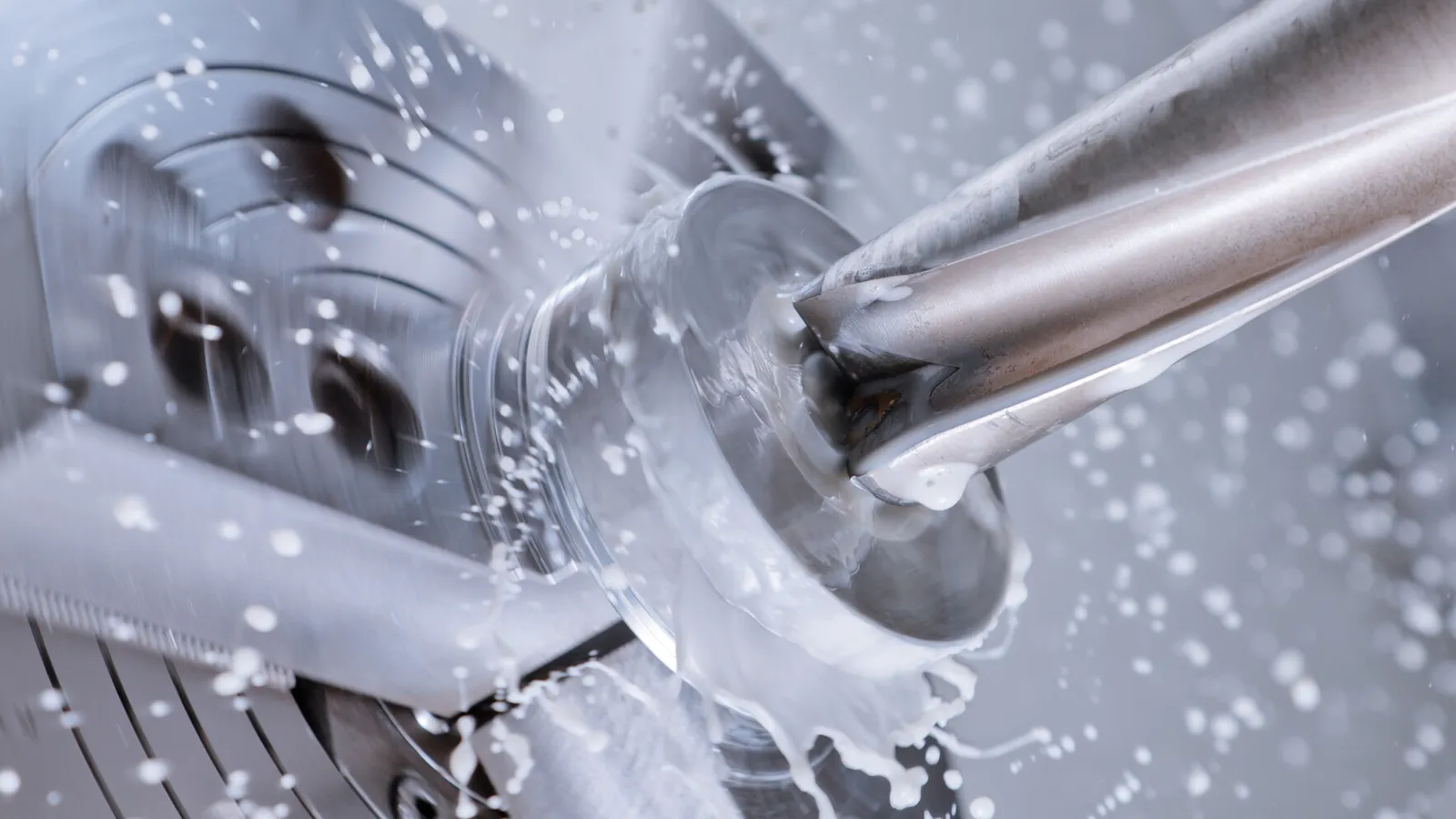
Table of Contents
A rotary union is one of those quiet components that keeps production lines running — until it fails. When the seal goes, the line stops, and a replacement unit can take days to arrive. On a machine that runs 24/7, a few hours of unplanned downtime costs more than the union itself did. Understanding how rotary unions work and how to spec them is a direct line to uptime.
This guide covers what a rotary union is, the types available by media, how to select one for your duty, and how to get the longest service life from it. Every figure is a typical range for standard industrial designs; your exact model limits come from the datasheet.
Keep reading for the full selection checklist.
What Is a Rotary Union?
A rotary union (also called a rotary joint, rotating union, or rotary coupling) is a mechanical seal that transfers fluid, air, gas, coolant, hydraulic oil, or steam from a stationary supply line into a rotating shaft or drum. It allows continuous 360° rotation without twisting or kinking the supply hose.
The core components are a housing (stationary), a rotor or shaft (rotating), mechanical seal faces, and bearings. The seal faces — typically carbon graphite against hardened steel or silicon carbide — are what make the rotary union different from a simple pipe fitting: they maintain pressure integrity while the two halves rotate against each other.
Rotary unions are used in machine tool spindles, printing and paper rolls, textile machinery, plastic film lines, rubber vulcanizers, hydraulic rotary actuators, and countless automated processes where a rotating part needs a continuous supply of a medium.
Two operating patterns exist. Continuous rotation — a dryer roll or spindle that spins in one direction for hours — is the easy case. Oscillating duty, where the shaft reverses through a limited arc as in rotary index tables and robotic wrists, is harder on the union: the faces stop and restart thousands of times per shift, so low breakaway torque and a stable face film matter more than top speed. A union that works well at 3,000 RPM continuous can fail early in oscillating service if its seal is not designed for it. State your duty cycle when you spec; suppliers rate the same hardware differently for each pattern.
Anatomy: what is actually inside
Every rotary union, from a 30 mm air fitting to a steam joint the size of a fire extinguisher, shares the same six functional parts. Knowing what each one does makes troubleshooting and supplier comparison far easier.
| Component | Function | Typical material |
|---|---|---|
| Housing (body) | Stationary part; carries the inlet/outlet ports and mounts to the machine frame | Aluminum (air/water), steel or stainless steel (steam, hydraulic) |
| Rotor (shaft) | Rotating member; connects to the machine shaft or drum and carries the medium into it | Hardened steel or stainless steel, ground to a fine finish |
| Seal faces | Primary sealing pair; one face rotates, one is fixed, and both run in contact under spring load | Carbon graphite vs silicon carbide, tungsten carbide, or hardened steel |
| Bearings | Carry radial and axial load and keep the rotor concentric with the housing | Deep-groove ball bearings (ABEC 3-5 typical); angular contact for high speed |
| Springs | Hold the faces in contact and compensate for face wear over the service life | Coil or wave springs; stainless or Inconel in steam service |
| Static seals (O-rings) | Seal between non-rotating parts: housing, cover, ports | NBR up to 100 °C, FKM up to 200 °C, PTFE or FFKM above that |
How the seal actually works
The interesting part is the rotating interface. Two flat, lapped faces — one on the rotor, one on the housing — press together under spring force. A thin film of the media itself, typically a few microns thick, separates them during rotation. That film is what does the sealing: it blocks the high-pressure side from the atmosphere while the faces slide over each other without metal-to-metal contact.
Because the faces are lubricated by the medium, the union must never run dry. A dry carbon face against steel will glaze and wear in minutes. That is why air and steam unions get felt oilers or grease ports in the seal cavity, and why flushing a machine with no media flow is a common way to ruin a union.
Surface finish on the counterface matters. Hardened steel rotors are ground to a mirror-like finish (Ra 0.2-0.4 µm typical) so the carbon face beds in evenly. A scored or rusted counterface shortens seal life to a fraction of normal.
Balanced vs unbalanced seal design
Two architectures dominate the market. In an unbalanced union, the full media pressure pushes the faces together, adding to the spring load. Simple and cheap, it works well at low pressure, but face wear accelerates as pressure rises. In a balanced union, the seal geometry is arranged so the pressure acts on equal and opposite areas, and face contact load stays nearly constant regardless of pressure. Balanced unions cost more but are the standard choice above roughly 10 bar and for any continuous duty, because they extend seal life considerably at high pressure.
Rule of thumb: below 10 bar and low speed, an unbalanced design is often fine. Above that, or for 24/7 operation, pay for the balanced design — the extra face life pays for the price difference several times over.
Types of Rotary Unions by Media
The media you transfer determines the rotary union family. Air and water unions are the simplest — typically single-passage, with NBR or FKM seals and aluminum housings. Coolant unions for machine tools add higher pressure ratings (up to 70 bar in through-spindle coolant designs).
Steam rotary unions
Steam unions are a specialized family. They handle saturated steam and need carbon graphite seal faces, hardened steel rotors, and often a siphon or condensate return passage. Paper mills and rubber processors are the biggest users.
Working pressure tracks the saturated steam curve. A few anchor points worth memorizing:
| Steam pressure (bar abs.) | Saturation temperature | Typical application |
|---|---|---|
| 1 bar | 100 °C | Low-pressure dryers, food and textile processes |
| 5 bar | 151.9 °C | Mid-range dryers, calenders |
| 10 bar | 179.9 °C | Corrugators and drying cylinders, 8-12 bar typical |
| 16-17 bar | ~201-204 °C | Rubber vulcanizers, high-pressure process steam |
The practical ceiling for standard steam unions sits around 17 bar / 200 °C. Above that, face materials and body construction change, and the price climbs with them. If your header runs 10 bar gauge, remember that plant gauges read above atmosphere — you are near 11 bar absolute and roughly 184 °C. When you quote a pressure to a supplier, state which one you mean.
Condensate handling decides whether a steam union lives or dies. Steam releases its heat by condensing on the roll wall, and that condensate must be drained continuously through the union — either with a stationary siphon pipe reaching toward the roll wall, or a rotating siphon scoop on high-speed machines. If condensate backs up, the roll heats unevenly, the faces run cooler than the steam they carry, and thermal stress shortens both seal and bearing life. If your machine has a syphon, order the union with the matching siphon configuration; a single-passage steam union without drainage is a setup for water hammer.
Water and coolant rotary unions
Water service spans 6-16 bar for general duty — cooling rolls, washdown, process water. NBR seals and aluminum bodies cover most of it up to about 80 °C. Machine tool coolant is a different animal: water-miscible cutting fluid at 20-70 bar through the spindle, at spindle speeds of 10,000-20,000 RPM. Those unions use silicon carbide face pairs and precision bearings, and they are built to survive chip-contaminated coolant.
Hydraulic rotary unions
Hydraulic unions transfer oil at high pressure — commonly 250-350 bar, with special designs to 500 bar. The seal stack matters more than the faces here: PTFE anti-extrusion rings and hardened steel housings stop the oil from forcing the O-rings out of their grooves. Multi-passage hydraulic unions (2, 4, 6 or more channels) are common in rotary actuators, excavator attachments, and test stands.
Compressed air and vacuum rotary unions
Air unions run 6-16 bar and are the workhorses of automated lines: rotary index tables, air chucks, blow-off stations, and packaging machines. Because air is dry, these unions use low-friction seal materials and minimal face loading to keep breakaway torque low at high cycle rates. Vacuum versions use the same geometry but are rated for negative pressure — typically down to -0.9 bar (vacuum), with seal materials chosen to avoid outgassing in clean-room duty.
Passage count: single vs multi
Within each family you also choose passage count: single-passage (one inlet, one outlet) or multi-passage (multiple independent channels for different media, or for combined fluid + pneumatic service). Multi-passage unions replace several single unions in one compact package, which is why machine builders specify them for combined coolant + air + hydraulic circuits on one spindle. The trade-offs are covered in our single vs multi-passage guide.
Media comparison at a glance
| Media | Typical pressure | Typical temperature | Typical speed | Seal pairing |
|---|---|---|---|---|
| Steam | 10-17 bar | 180-200 °C | <500 RPM typical for dryer rolls | Carbon graphite vs hardened steel or SiC |
| Water | 6-16 bar | ≤80 °C | Up to 3,000 RPM | Carbon vs ceramic or stainless; NBR seals |
| Hydraulic oil | 250-350 bar (to 500 bar special) | ≤120 °C | <500 RPM typical for actuators | PTFE anti-extrusion rings, hardened steel |
| Compressed air | 6-16 bar | Ambient to 60 °C | Up to 10,000 RPM | Low-friction carbon or polymer faces |
| Machine coolant | 20-70 bar (through-spindle) | ≤60 °C | 10,000-20,000 RPM | SiC vs SiC or carbon vs SiC |
Rotary Union Selection Checklist
Specifying a rotary union comes down to eight parameters, worked through in a fixed order. Skip one and you discover it at commissioning, when the union is already bolted on.
| Step | Parameter | What to nail down | Typical value / rule of thumb |
|---|---|---|---|
| 1 | Media and cleanliness | Exact medium, contamination level, additives (e.g. glycol, chlorine) | Filtration to 25-50 µm where debris is present |
| 2 | Pressure | Max working pressure including spikes, not just steady state | Water/air 6-16 bar; hydraulic 250-350 bar; steam 10-17 bar |
| 3 | Temperature | Media temperature and ambient; both sides of the seal | Above 100 °C switch NBR to FKM; above 200 °C go PTFE or carbon faces |
| 4 | Speed | Maximum continuous RPM, plus duty cycle | Low <500 RPM; medium 500-5,000; high >5,000 RPM needs purpose-built design |
| 5 | Port size and thread | Connection size and thread standard on the machine side | G (BSPP), NPT, BSPT, UNF or metric; see thread table below |
| 6 | Passage count | Single or multi-channel, and which media per channel | Multi-channel costs more but replaces several single unions |
| 7 | Mounting and connection | Thread, flange or shaft mount; how the machine side connects | Flange designs handle higher torque and larger machines |
| 8 | Seal material and life target | Required service interval and whether the duty is continuous | Balanced seal design for >10 bar or 24/7 duty |
Thread standards: NPT vs BSP
Thread mismatches are the most common reason a brand-new union will not fit the machine. Three standards cover most of the world, and they are not interchangeable.
| Standard | Thread angle | Taper | How it seals | Where it dominates |
|---|---|---|---|---|
| NPT | 60° | Tapered | Thread deformation; needs sealant tape or compound | North America |
| BSPP (G) | 55° | Parallel | O-ring or bonded washer at the face | Europe, Asia, most machine tools |
| BSPT | 55° | Tapered | Thread deformation, like NPT | UK, Japan, Commonwealth markets |
| Metric / UNF | 60° | Parallel | O-ring or copper washer | Hydraulic fittings (DIN 3852, JIC) |
BSPP port sizes are quoted in nominal bore inches: G1/4 (13.16 mm OD), G3/8 (16.66 mm), G1/2 (20.96 mm), G3/4 (26.44 mm), G1 (33.25 mm) per ISO 228. NPT sizes carry threads-per-inch in the name — 1/2-14 NPT, 3/4-14 NPT, 1-11.5 NPT. When in doubt, measure the port with a thread gauge and send the reading to your supplier. Do not try to force a tapered NPT male into a parallel G female; the mismatch leaks and damages the port.
Common selection mistakes
Three errors show up repeatedly in field returns. First, sizing pressure from the pump rating instead of the pressure at the union, ignoring spikes from valve closure — hydraulic circuits can see 1.5x steady-state pressure in a surge. Second, choosing seal material on media temperature alone while forgetting radiant heat from nearby machinery, which can push the seal cavity 30-50 °C above media temperature. Third, treating speed as a soft requirement; a union rated for 500 RPM will not survive 3,000 RPM no matter how new it is. Hydraulic rotary unions cover the high-pressure side; steam rotary unions handle the hot end.
Common Rotary Union Applications
Every rotating machine that needs a continuous supply of a medium is a candidate. The table below covers the five biggest industries by installed base, with the media and speed ranges you will actually find.
| Industry | Typical media | Typical speed | Typical duty |
|---|---|---|---|
| CNC machine tools | Water-miscible coolant, air | 10,000-20,000 RPM spindle | Through-spindle coolant at 20-70 bar; high-speed balanced design |
| Paper and pulp | Steam, condensate | Dryer rolls typically <500 RPM | Siphon-equipped steam unions heating dryer cylinders 8-12 bar |
| Steel and metal processing | Hydraulic oil, water | Low speed, reversing duty | Multi-passage unions for coilers, uncoilers, roll bending |
| Chemical and plastics | Thermal oil, steam, process fluids | Medium speed | Heated extruder barrels, calender rolls; media up to 300 °C |
| Wind power | Hydraulic oil | Low to medium | Pitch systems and yaw brakes; multi-passage, corrosion-protected |
Machine tools are the most demanding case: coolant at 20-70 bar through a spindle spinning at 10,000-20,000 RPM leaves no room for unbalanced seals or standard bearings. Paper mills run the opposite profile — high pressure steam at modest speed, where siphon design and condensate drainage decide performance more than face speed. Steel mills put unions on reversing drives where shock loads hammer the bearings, so overhung weight and mount rigidity matter as much as the seal. Chemical plants add corrosion to the mix, which pushes housing material up to stainless steel and seal materials to PTFE-family grades. Wind turbines run hydraulic pitch systems where a single multi-passage union carries several oil circuits through the nacelle, and a leak means a climb, not a walk.
If your machine does not appear above, the selection logic is identical: identify the media, the three operating numbers (pressure, speed, temperature), and the port size, and the right family picks itself.
Rotary Union Maintenance & Service Life
The number one cause of premature rotary union failure is misalignment. Side load on the shaft accelerates seal and bearing wear dramatically. Align the shaft axis within 0.1 mm and use flexible hose connections to absorb thermal expansion.

Lubrication matters. Many unions have a felt oiler or grease port in the seal cavity — a few drops per month extends seal life several-fold. Follow the manufacturer schedule.
Contamination is the second killer. Abrasive particles trapped between the faces act as lapping compound and wear both faces at once. A 25-50 µm filter on the supply line is cheap insurance on any dirty circuit.
Maintenance schedule
| Frequency | Action | Why it matters |
|---|---|---|
| Daily | Visual leak check at seal and ports; record gauge pressure and temperature | Catches a failing face before it scores the rotor |
| Weekly | Check oiler level, top up; inspect flexible hoses for kinks and chafing | Lubrication starvation destroys faces faster than anything else |
| Monthly | Torque-check mounting bolts; dial-indicator runout check (≤0.1 mm TIR); listen for bearing noise | Misalignment is the top wear driver; catch it while it is cheap |
| Quarterly | Replace felt oiler wick if fitted; inspect faces through the service port during planned stops | A 2 EUR wick beats a 200 EUR seal kit |
| Yearly | Replace seal kit (O-rings, carbon faces, springs); inspect and replace bearings; measure rotor runout | Restores the original life curve at a fraction of replacement cost |
Failure modes and what they mean
| Symptom | Likely cause | Fix |
|---|---|---|
| Drips at the seal | Worn or glazed faces; dry running; contamination | Replace seal kit; check lubrication and filtration |
| Housing runs hot | Bearing damage; speed beyond seal material rating | Reduce speed or upgrade to a high-speed design |
| Vibration | Bearing wear; misalignment; overhung load | Realign within 0.1 mm; check mount rigidity |
| Rising breakaway torque | Debris between faces; face glazing | Flush the circuit; inspect and replace faces |
| Pressure loss | Internal leakage past worn faces | Rebuild with a new seal kit |
Watch for the failure signs: leaks at the seal (visible drips or pressure loss), overheating (hot housing), vibration, or torque increase. Catching a worn seal early costs a seal kit; ignoring it costs a rebuilt rotor or a new union.
Replacement strategy: keep a seal kit on the shelf for the unions on your critical machines. Standard seal kits cover O-rings, carbon faces, and springs — a 15-minute field swap vs. days of downtime for a replacement unit.
When a union fails hard, decide rebuild vs. replace by inspecting two parts: the rotor counterface and the housing bore. If the counterface is free of deep scoring and rotor runout measures under 0.05 mm, a seal kit rebuild typically restores the union to 80-90% of new performance at 15-20% of the cost of a new unit. If the counterface is scored or the housing is corroded, replace the whole union — a rebuilt rotor with a bad counterface eats the new seal kit within weeks. Get the inspection done before you order parts, and keep one spare rotor in stores for the highest-utilization machines.
Rotary Union FAQ
What is the difference between a rotary union and a rotary joint?
The terms are interchangeable. Rotary union and rotary joint both describe the same component; some regions use "rotary joint" more for steam service, but the working principle is identical.
How long does a rotary union last?
With balanced seals and correct lubrication, typical service life is 8,000-15,000 hours before seal maintenance. High-speed and high-temperature duty shortens this; clean media and alignment extend it. Plan your first seal kit change around the low end of that range for continuous duty.
Can a rotary union handle steam?
Yes — steam-rated rotary unions use carbon graphite and hardened steel seal faces, with condensate drainage. They are rated for saturated steam up to about 200 °C in standard configurations (10 bar = 179.9 °C, 16-17 bar ≈ 201-204 °C).
How do I choose the right rotary union?
Define four parameters: media (air, water, coolant, oil, steam), pressure, speed, and port size. Then choose passage count (single or multi-channel) and seal material for your temperature. Send us those four numbers and we will recommend a model within 24 hours.
What is the maximum speed a rotary union can handle?
Speed ratings fall into three bands: low (under 500 RPM), medium (500-5,000 RPM), and high (over 5,000 RPM). Purpose-built high-speed unions for CNC spindles run 10,000-20,000+ RPM using precision bearings and balanced seal designs. A standard low-speed union cannot be pushed into the high band.
Can one rotary union carry more than one media?
Yes. Multi-passage unions carry 2, 4, 6 or more independent channels, each with its own port pair. A common combination is hydraulic oil for actuation plus pilot air for sensing, or coolant plus air in one spindle package. Each channel is isolated from the others internally.
Should I use NPT or BSP threads?
Match whatever is on the machine side. NPT (60° tapered, seals by thread deformation) dominates North America; BSPP/G (55° parallel, seals with an O-ring) dominates Europe and Asia. Never mix tapered and parallel threads. When unsure, gauge the port and send the reading to your supplier.
Why is my rotary union leaking?
Three causes cover most cases: worn seal faces (dry running or contamination), wrong seal material for the actual temperature, and misalignment adding side load. Inspect the faces first — glazing and scoring tell you which cause it was.
How important is alignment really?
Critical. Side load from misalignment is the number one cause of premature failure. Target ≤0.1 mm total indicated runout on the shaft, and use flexible hoses so thermal expansion and machine vibration do not transmit into the union body.
Which seal materials do I need at higher temperatures?
NBR covers up to 100 °C, FKM up to 200 °C, PTFE up to about 260 °C continuous, and FFKM above that. The rotating faces are a separate decision: carbon graphite for steam and general duty, silicon carbide for abrasive media and high speed, and PTFE-family inserts where chemicals attack carbon.
Your Action Roadmap
A wrong spec costs more than the union itself. A mismatched thread means adapters and a leak path, a seal material picked without accounting for radiant heat means a service interval measured in weeks instead of years, and a misaligned mount kills bearings in a season. The fix is to send the duty numbers, not the brand name.
Send us your duty data — media, pressure, speed, temperature, and port size — and we will return a model recommendation with seal kit pricing within 24 hours. Standard sizes ship from stock, drawings are available on request, and seal kits are confirmed in stock before we take your order.
NEXT STEP
Ready to Spec the Right Rotary Union?
Send us your requirements — our team responds within 24 hours with pricing and lead time.
Written by
LOOP ENGINEERING TeamRotary union engineering specialist. LOOP ENGINEERING helps machine builders and maintenance teams source factory-direct rotary unions.