
Rotary Union vs Swivel Joint: What's the Difference?
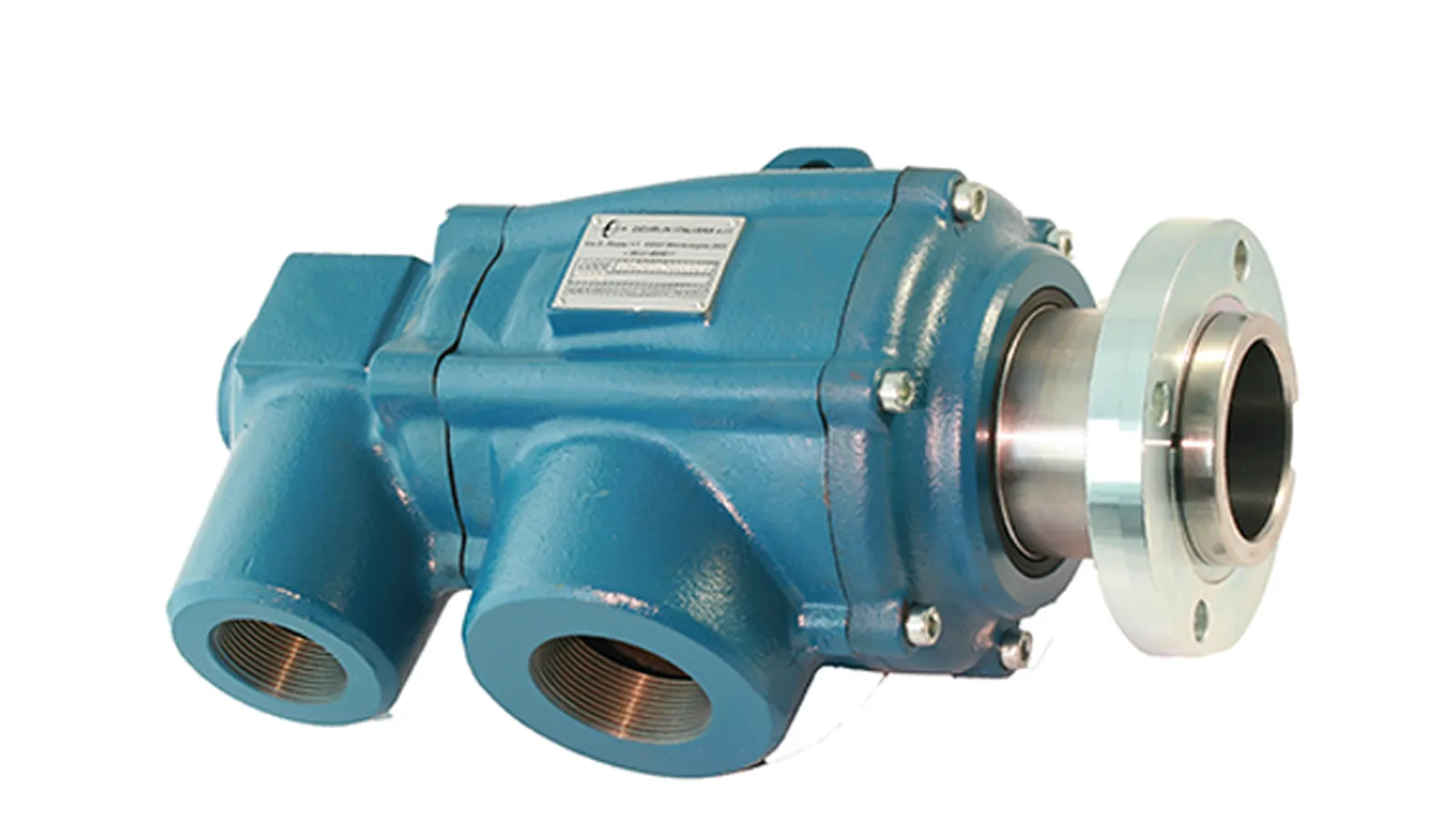
Table of Contents
Rotary union, swivel joint, rotary joint, rotating union — four names, two different products, and a lot of confusion in between. Buyers frequently order one when they need the other, then wonder why the part fails. This guide clears up the difference between a rotary union and a swivel joint, and tells you which one your machine needs.
The short version: rotary unions are designed for continuous 360° rotation at speed; swivel joints are designed for slow or intermittent rotation (like a hose connector). The sealing technology is fundamentally different.
The Snapshot
- Rotary union: continuous 360° rotation at speed, with mechanical seal faces and bearings. For machine tools, dryers, spindles.
- Swivel joint: slow or intermittent rotation, usually a ball-bearing hose connector. For loading arms, drum fillers, articulated piping.
- Key difference: the seal. Rotary unions use dynamic face seals rated for continuous high-speed rotation; swivels use O-ring or lip seals for slow motion.
- Rule: rotating continuously or at speed → rotary union. Rotating slowly or occasionally → swivel joint may be enough.
What Is a Rotary Union?
A rotary union (rotary joint, rotating union) is a precision sealing device for transferring fluid, air, steam or coolant into a part that rotates continuously — often at high speed. It has mechanical seal faces (carbon against steel, or similar), precision bearings, and is engineered for thousands of RPM and continuous duty.
Think: a CNC spindle spinning at 15,000 RPM with coolant through the center, or a paper dryer drum rotating 24/7 with steam inside. The seal face must survive continuous relative motion at high surface speed — that is what rotary union engineering is about.
What Is a Swivel Joint?
A swivel joint is a rotating connector for hoses and piping — a ball bearing or sleeve that lets a hose rotate relative to its fitting. It seals with O-rings or lip seals designed for slow or occasional rotation: loading arms, drum fillers, articulated hose reels, and rotating pipe sections.
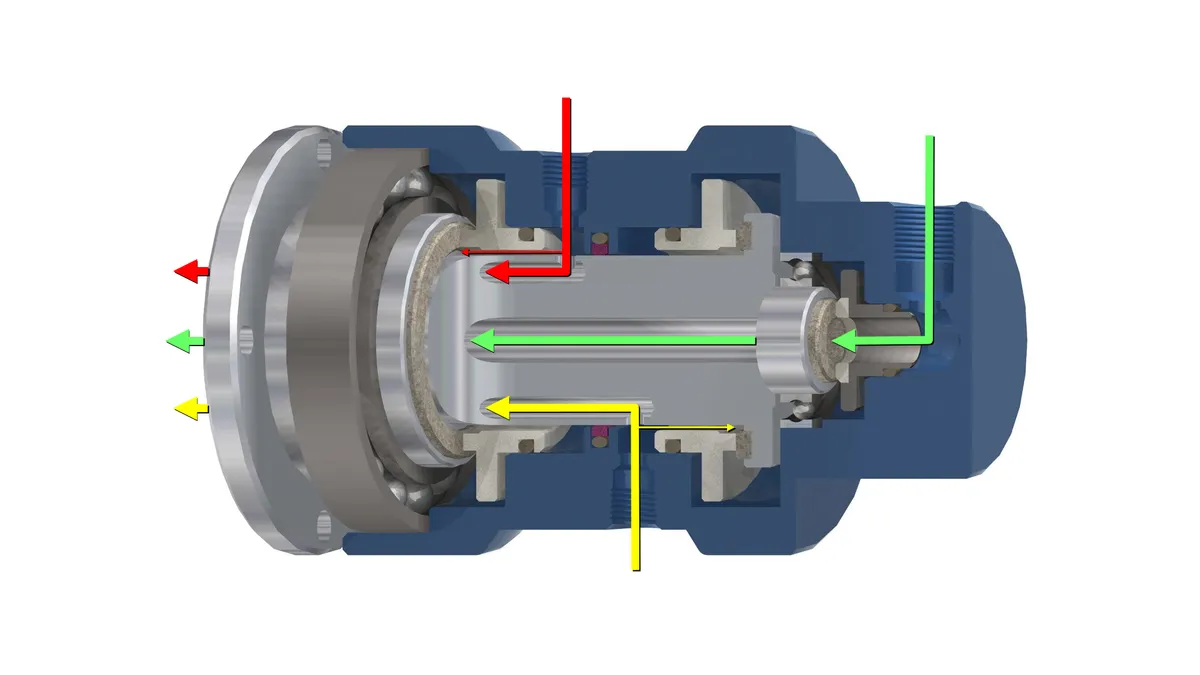
Think: a tanker loading arm that swings into position, or a drum-filling lance that rotates a quarter turn. The joint rotates slowly, intermittently, and not under high speed. It does not need dynamic face seals — a simple O-ring on a bearing is enough.
Side-by-Side Comparison
- Rotation: rotary union = continuous 360° at speed; swivel = slow or intermittent, limited angle or full turn.
- Seal: rotary union = dynamic face seal (carbon/steel); swivel = O-ring or lip seal on a bearing.
- Speed: rotary union = up to 20,000+ RPM; swivel = typically under 100 RPM.
- Pressure: both can handle high pressure, but rotary unions are engineered for pressure × speed (PV) together.
- Cost: rotary unions cost more — precision faces, bearings, balancing. Swivels are simpler and cheaper.
- Typical use: rotary union = machine tool, dryer, spindle; swivel = hose, loading arm, drum filler.
Which One Do You Need?
Ask two questions:
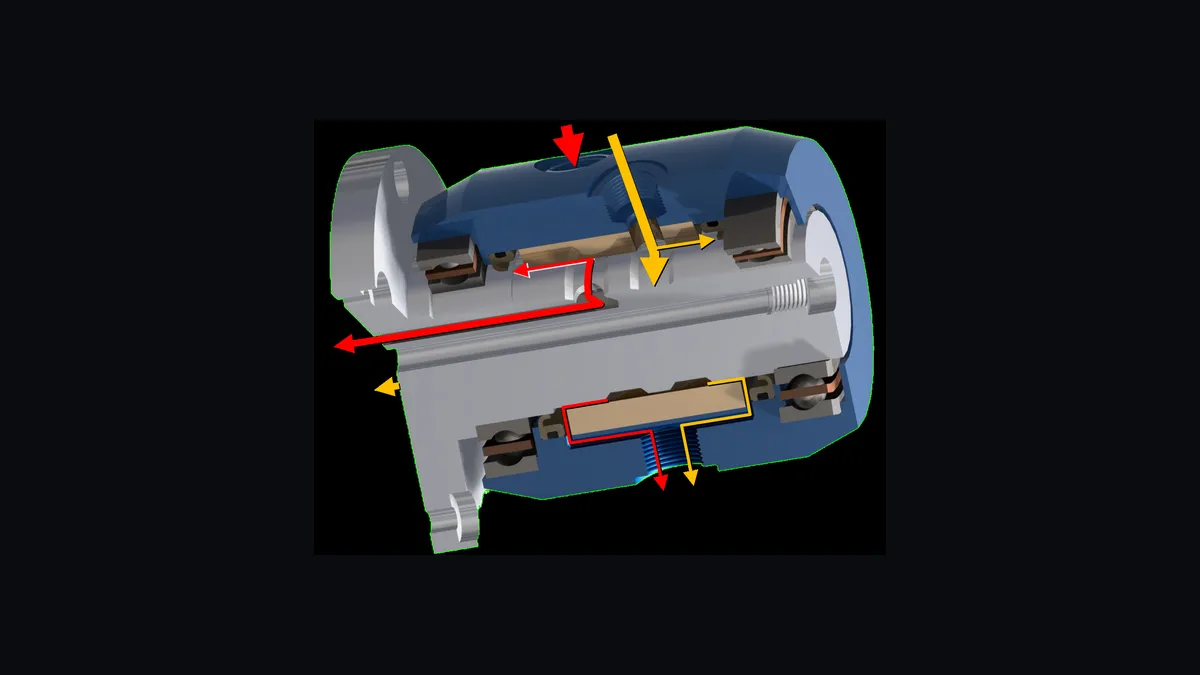
- How fast does it rotate? Continuously at hundreds or thousands of RPM → rotary union. Slow, occasional, or partial turns → swivel joint may suffice.
- How long must the seal survive? Continuous duty at speed destroys swivel seals fast. If the part rotates for hours a day, use a rotary union.
There is gray area — a hose reel that rotates slowly but thousands of times a day sits between the two. When in doubt, a rotary union is the safer, longer-lived choice; a swivel is the budget choice for light duty.
Terminology Trap
Adding to the confusion: some manufacturers call slow-speed rotary unions "swivel joints", and some call hydraulic multi-passage unions "hydraulic swivels". The words are used loosely across the industry. When ordering, specify the duty — speed, pressure, media, rotation mode — not just the name. A supplier can then tell you which product class you actually need.
If you are replacing a part, match the dimensional envelope and the seal type of the original. A rotary union and a swivel with the same thread size are not interchangeable.
Quick Answers
Can a swivel joint replace a rotary union?
Only for slow, light duty. Swivel seals are not designed for continuous high-speed rotation — they wear out quickly and leak.
Is a hydraulic swivel the same as a hydraulic rotary union?
Often the same product under a different name — a multi-channel high-pressure rotating joint. Confirm by duty, not name.
What is the difference in cost?
Rotary unions are typically 2-5× the price of a comparable swivel, reflecting the precision seal faces and bearings.
How do I know what I need?
Tell your supplier the speed, pressure, media and rotation pattern. Those four facts decide between a rotary union and a swivel.
NEXT STEP
Ready to Spec the Right Rotary Union?
Send us your requirements — our team responds within 24 hours with pricing and lead time.
Written by
LOOP ENGINEERING TeamRotary union engineering specialist. LOOP ENGINEERING helps machine builders and maintenance teams source factory-direct rotary unions.