
Hydraulic Rotary Union Guide: Multi-Channel High Pressure Explained
Table of Contents
A hydraulic rotary union carries 350 bar through a rotating joint — every seal face under pressure, every channel isolated, every drop of leakage a productivity loss. Hydraulic unions are the most demanding family in the rotary union world: multi-channel, high-pressure, precision-machined. This guide explains how they work, what the ratings mean, and how to select and maintain them.
You will learn the pressure classes, channel configurations, seal stack design, and the applications where hydraulic unions earn their keep.
The Snapshot
- Hydraulic rotary unions transfer oil at 250-350 bar standard, with special designs to 500 bar.
- Multi-channel: 2, 4 and 6-channel bodies carry pressure + return + drain + pilot through one rotating joint.
- Seals: precision seal stacks isolate each channel — the hardest engineering in rotary unions.
- Applications: rotary actuators, excavator attachments, cranes, presses, marine and test stands.
- Cost: several times a pneumatic union, justified by replacing multiple single unions and hose bundles.
What Is a Hydraulic Rotary Union?
A hydraulic rotary union (often called a hydraulic swivel or rotating distributor) transfers pressurized hydraulic oil between a stationary supply and a rotating assembly. Unlike a pneumatic union at 10 bar, a hydraulic union must seal 250-500 bar continuously — with multiple independent channels, each carrying its own pressure and return circuit.
The rotating part might be a crane turret, an excavator attachment, a rotary actuator, or a test-stand spindle. The union sits on the rotation axis, carrying oil into the rotating structure without twisting the hoses.
Because pressure is high and failure is costly, hydraulic unions are machined from solid steel or stainless, with hardened rotors and precision-ground seal faces.
Pressure Ratings & Design
The standard classes are 250 bar, 350 bar and 500 bar (roughly 3,600 / 5,000 / 7,200 psi). The rating is the continuous working pressure; spikes above it lift seal faces and cause channel cross-leakage.
Design consequences of pressure:
- Wall thickness: the body must contain the pressure — larger bores mean thicker walls and bigger bodies.
- Rotor: hardened steel (often nitrided or hard-chromed) to resist wear and scoring at high face pressure.
- Seal faces: precision-ground carbon or bronze against hardened steel, with hydrostatic balancing to keep face pressure stable.
- Testing: 100% pressure testing at 1.5× rated pressure before shipment is standard for reputable factories.
Multi-Channel Configurations
Channel count matches the hydraulic circuits on the rotating side:
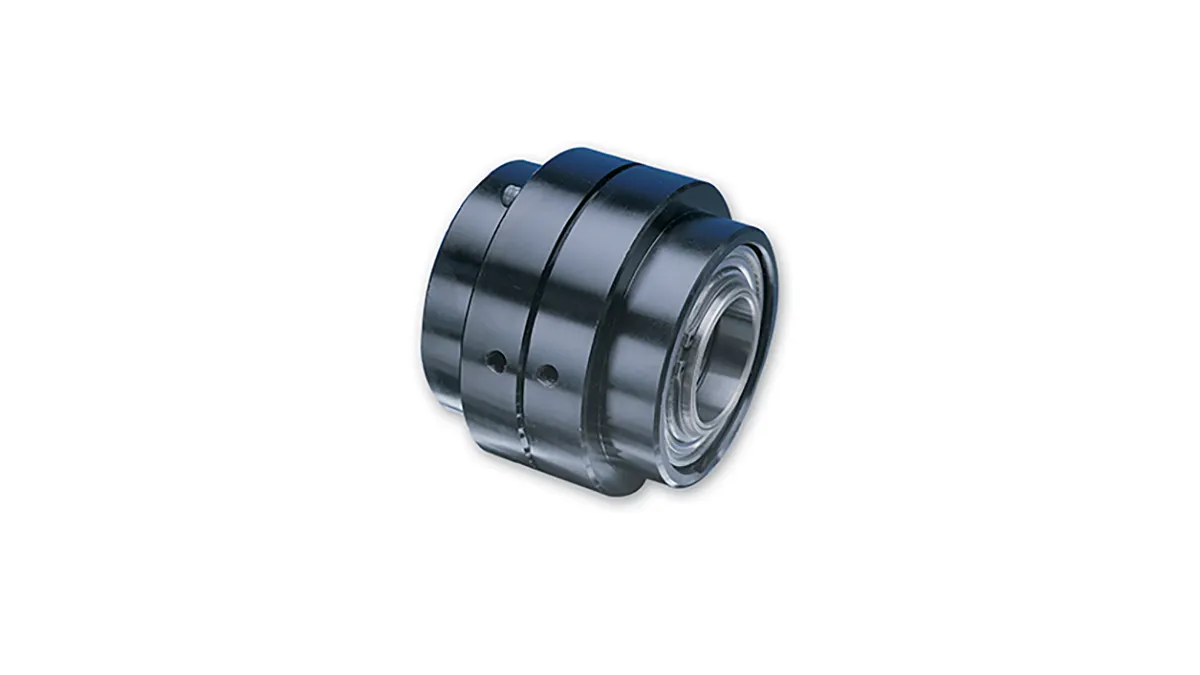
- 2-channel: one pressure + one return — the simplest rotating hydraulic circuit, common on small rotary actuators.
- 4-channel: two circuits (two pressure + two return) — standard for larger actuators and crane functions.
- 6-channel: three circuits — excavator attachments, multi-function marine and test-stand applications.
- Mixed: hydraulic channels + pneumatic or drain channels in one body for combined actuation and control.
Each channel has its own inlet/outlet pair, isolated by seal stacks between channels. Cross-leakage between channels is the failure mode that matters most — it shows up as actuator drift or slow creep.
Seal Stacks & Materials
The seal stack is the core of a hydraulic union. Between each pair of channels sits a precision seal arrangement: a carbon or bronze bearing ring, O-rings, and often a sacrificial wear ring. The rotating rotor runs against these faces, which are lubricated by the oil itself.
Materials: rotor in hardened steel or stainless; faces in carbon graphite (for steel rotors) or bronze (for stainless, to avoid galling); O-rings in NBR for mineral oil (standard), FKM for high temperature or aggressive fluids, or special compounds for water-glycol and biodegradable fluids.
Specify the fluid — mineral oil, water-glycol, HFD-R, or biodegradable — because the seal material must match. The wrong O-ring swells or degrades and the channel starts leaking internally.
Applications
- Rotary actuators: pressure + return through the rotation axis for torque generation.
- Excavator attachments: multiple hydraulic functions through the boom pivot — the classic 4-6 channel swivel.
- Cranes and aerial platforms: power and control to the rotating upper structure.
- Hydraulic presses: rotating dies or clamping systems needing oil at full working pressure.
- Marine: stainless swivels for winches and deck machinery in saltwater.
- Test stands: rotating spindles with high-pressure oil for component testing.
Selection Parameters
Provide these to spec a hydraulic union:
- Pressure: maximum working pressure per channel, including spikes.
- Flow: flow per channel (L/min) — sets the port and bore size.
- Channel count: how many pressure/return/pilot/drain circuits.
- Fluid: mineral oil, water-glycol, biodegradable, or other — drives seal material.
- Speed: rotation speed in RPM (most hydraulic unions run slow, under 100 RPM).
- Ports: thread type and size (G, NPT, SAE flange for high flow).
- Mounting: flange or thread mount, and whether the union supports shaft load.
Maintenance & Leak Prevention
Hydraulic unions fail by internal or external leakage. Prevention starts with clean oil — a micron filter upstream protects the seal faces from contamination. Monitor for the signs: actuator drift (internal cross-leakage), visible seepage at the shaft (external seal wear), and oil temperature rise (excess friction).
Service: rebuild with a seal kit on schedule (typically 1-3 years depending on duty), replace the wear rings, and re-test at 1.5× pressure before re-installation. Keep the seal kit and the torque spec for the rebuild — a wrong preload on the seal stack causes immediate leakage.
Quick Answers
What pressure do hydraulic rotary unions handle?
Standard classes are 250, 350 and 500 bar. Confirm the rating with spikes included — seal faces lift above the rated pressure.
How many channels do I need?
Count your circuits: each pressure line and each return line is a channel. Two circuits = 4 channels, plus pilot or drain if needed.
Can a hydraulic union carry different fluids?
Each channel is isolated, so different fluids can pass through the same body — but seal material must match every fluid used.
Why does my rotary actuator drift?
Internal cross-leakage between channels — usually worn seal faces or wrong seal material for the fluid. Rebuild with the correct seal kit.
NEXT STEP
Ready to Spec the Right Rotary Union?
Send us your requirements — our team responds within 24 hours with pricing and lead time.
Written by
LOOP ENGINEERING TeamRotary union engineering specialist. LOOP ENGINEERING helps machine builders and maintenance teams source factory-direct rotary unions.