
8 Industries That Depend on Rotary Unions (2026 Application Guide)
Table of Contents
If a machine rotates and needs fluid, air or steam at the same time, there is a rotary union in it. From a 20,000 RPM CNC spindle to a 3-meter paper dryer drum, rotary unions are the quiet enabler of continuous production. This guide walks through eight industries that depend on rotary unions and the specific duty each one demands.
Use it to benchmark your own application, spot the right union family for your industry, and speak your supplier's language with the right specs.
The Snapshot
- Machine tools: through-spindle coolant at up to 70 bar and 20,000 RPM.
- Paper & pulp: steam unions with siphons on drying cylinders, 24/7.
- Rubber & plastics: steam or hot-oil unions on calenders and vulcanizers.
- Textile & printing: water and air unions on drying and coating rolls.
- Heavy equipment: multi-passage hydraulic unions at 250-350 bar.
- Packaging: compact pneumatic unions cycling at high frequency.
- Food & beverage: stainless unions with food-grade seals on filling and processing lines.
- Energy: hydraulic and cooling unions on turbines, generators and solar trackers.
1. Machine Tools & CNC
Machine tools are the biggest user of high-speed rotary unions. Through-spindle coolant unions feed cutting fluid to the tool at 40-70 bar while the spindle spins at 10,000-20,000+ RPM, keeping tool life up and thermal drift down. Air unions on the same spindles handle blow-off and tool-clamping air.
Key spec: high-speed design, hybrid bearings, PV rating confirmed at your speed × pressure.
2. Paper & Pulp
Paper machines run dozens of steam-heated drying cylinders at line speed, 24/7/365. Each cylinder has a steam rotary union with a stationary or rotating siphon that removes condensate continuously. A failed union means a web break and hours of lost production.
Key spec: carbon seal stack, steel or stainless body, siphon system sized for the condensate rate.
3. Rubber & Plastics
Calenders, extruder barrels and vulcanizers use steam or hot-oil rotary unions to heat rolls and drums to 150-200 °C. Tire plants are heavy users of steam unions at 10-17 bar with hardened faces for dirty condensate.
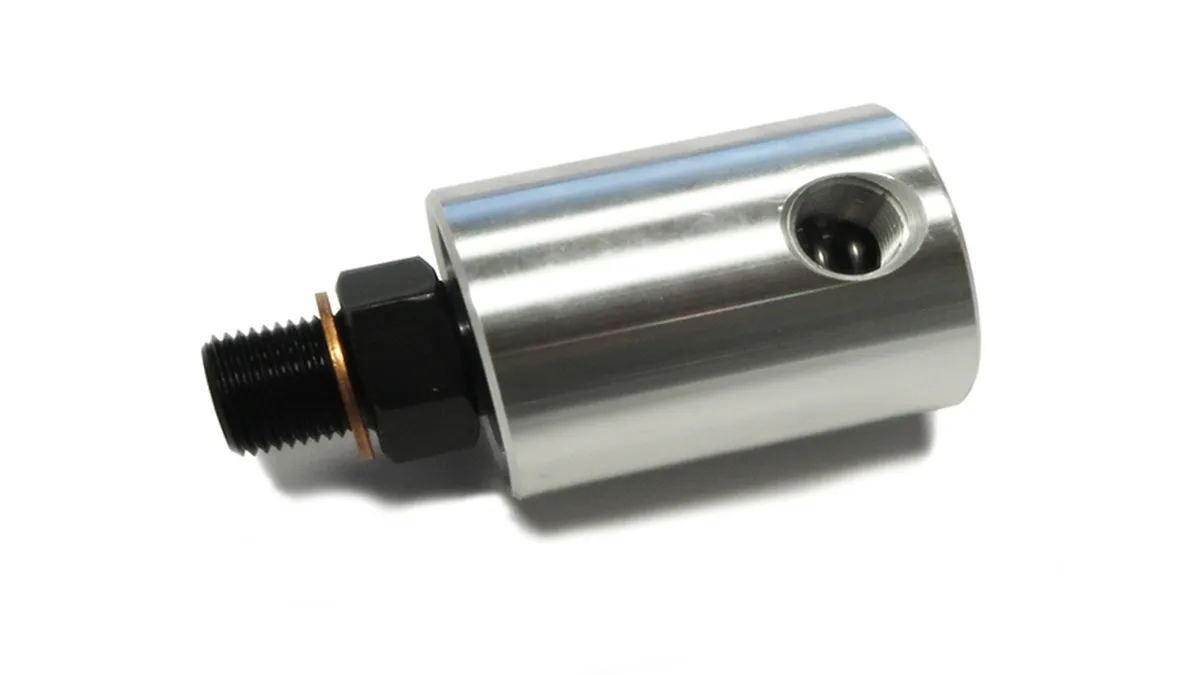
Key spec: high-temperature seals (carbon faces, FKM O-rings), steel body, drainable condensate path.
4. Textile & Printing
Textile dryers, coating lines and printing presses use water and air unions on heated or chilled rolls rotating at line speed. Chill rolls need reliable water flow; drying cylinders need steam or hot oil. Compact single-passage unions dominate.
Key spec: single-passage water or steam union, moderate pressure, corrosion-resistant materials for wet service.
5. Heavy Equipment & Hydraulics
Excavator attachments, rotary actuators, cranes and hydraulic test stands use multi-passage hydraulic unions at 250-350 bar (specials to 500 bar). Each hydraulic function needs its own pressure and return channel through the rotating joint.
Key spec: multi-passage (2-6 channels), hardened steel rotor, high-pressure seal stacks, stainless options for marine.
6. Packaging & Automation
Rotary index tables, labelers and pick-and-place cells use compact pneumatic unions that cycle at high frequency with minimal torque. Air and vacuum service through one or two channels is the norm, and low cost per unit matters.
Key spec: compact single or dual-passage pneumatic union, aluminum housing, low-friction seals, G1/8-G1/4 ports.
7. Food & Beverage
Filling machines, pasteurizers and food processing lines use stainless rotary unions with food-grade seals for water, CIP (clean-in-place) solutions and steam. Corrosion resistance and easy sanitization drive the design.
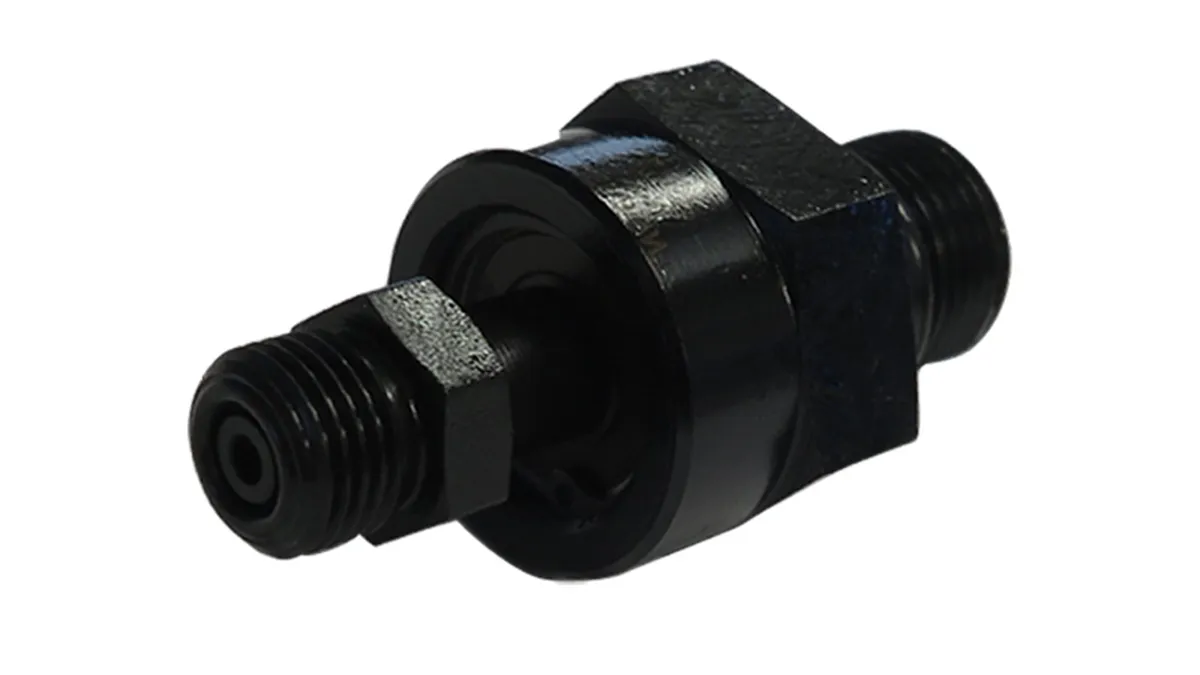
Key spec: stainless body, FKM or PTFE food-compatible seals, hygienic port connections.
8. Energy & Renewables
Wind turbine pitch systems, solar tracker drives and hydro generator cooling use hydraulic and coolant rotary unions. These run outdoors, often unmonitored, so reliability and seal life dominate the spec.
Key spec: corrosion-resistant materials, wide temperature range, multi-passage hydraulic for pitch actuation.
Application Specs at a Glance
- Machine tools: coolant 40-70 bar / 10-20k RPM / high-speed union
- Paper: steam 8-12 bar / slow / siphon steam union
- Rubber: steam 10-17 bar / moderate / hardened-face steam union
- Textile: water & steam / line speed / single-passage
- Heavy equipment: oil 250-350 bar / slow / multi-passage hydraulic
- Packaging: air 6-10 bar / high cycle / compact pneumatic
- Food: water & steam / moderate / stainless food-grade
- Energy: oil & coolant / slow-outdoor / corrosion-resistant
Quick Answers
Which industry uses the most rotary unions?
Paper and machine tools are the two largest users — paper for steam-heated dryers, machine tools for through-spindle coolant at high speed.
What is the most demanding rotary union application?
Through-spindle coolant at high speed combines the highest pressure and speed (PV value), making it the hardest duty for seals.
Are rotary unions the same in every industry?
No — each industry's media, pressure, speed and temperature determine a different union family. The envelope is similar, but seals and materials differ significantly.
How do I know which rotary union my application needs?
Identify your industry's duty (media, pressure, speed, temperature) and match it to the union family — or send the four numbers to a supplier for a recommendation.
NEXT STEP
Ready to Spec the Right Rotary Union?
Send us your requirements — our team responds within 24 hours with pricing and lead time.
Written by
LOOP ENGINEERING TeamRotary union engineering specialist. LOOP ENGINEERING helps machine builders and maintenance teams source factory-direct rotary unions.